Madrid Free Walking Tour
2h30 · rated 9.4/10 in 38,191 reviews
Guided in English
Reserve a spotMadrid is one of the easiest capitals in Europe to see for nothing, as long as you go late in the day. The Prado opens free for its last two hours every day, the Reina Sofía six evenings a week, and the Thyssen all Monday afternoon. Retiro Park, the Temple of Debod, the Goya frescoes at San Antonio de la Florida and the city's own museums never charge. The catch is the royal sites: their free hours are only for EU and Latin American citizens. Everything below was checked against official sources in October 2026, with exact hours and who qualifies.
These have no fixed price. You reserve a spot, and at the end you tip the guide what you think the tour was worth.
2h30 · rated 9.4/10 in 38,191 reviews
Guided in English
Reserve a spot2h · rated 9.2/10 in 5,496 reviews
Guided in Spanish
Reserve a spotSpots are booked through Civitatis.
Open to everyone, every day they are open. No ticket to buy.
 FREE
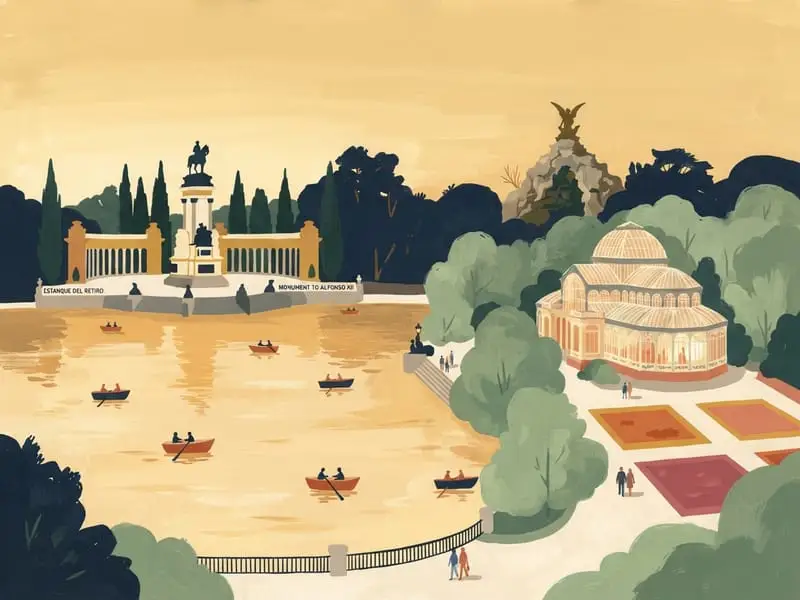
FREEThe former royal grounds east of the Prado, 125 hectares with a boating lake, a rose garden, a glass palace and what is said to be the only public statue of the fallen angel. With Paseo del Prado it is a UNESCO World Heritage site.
 FREE
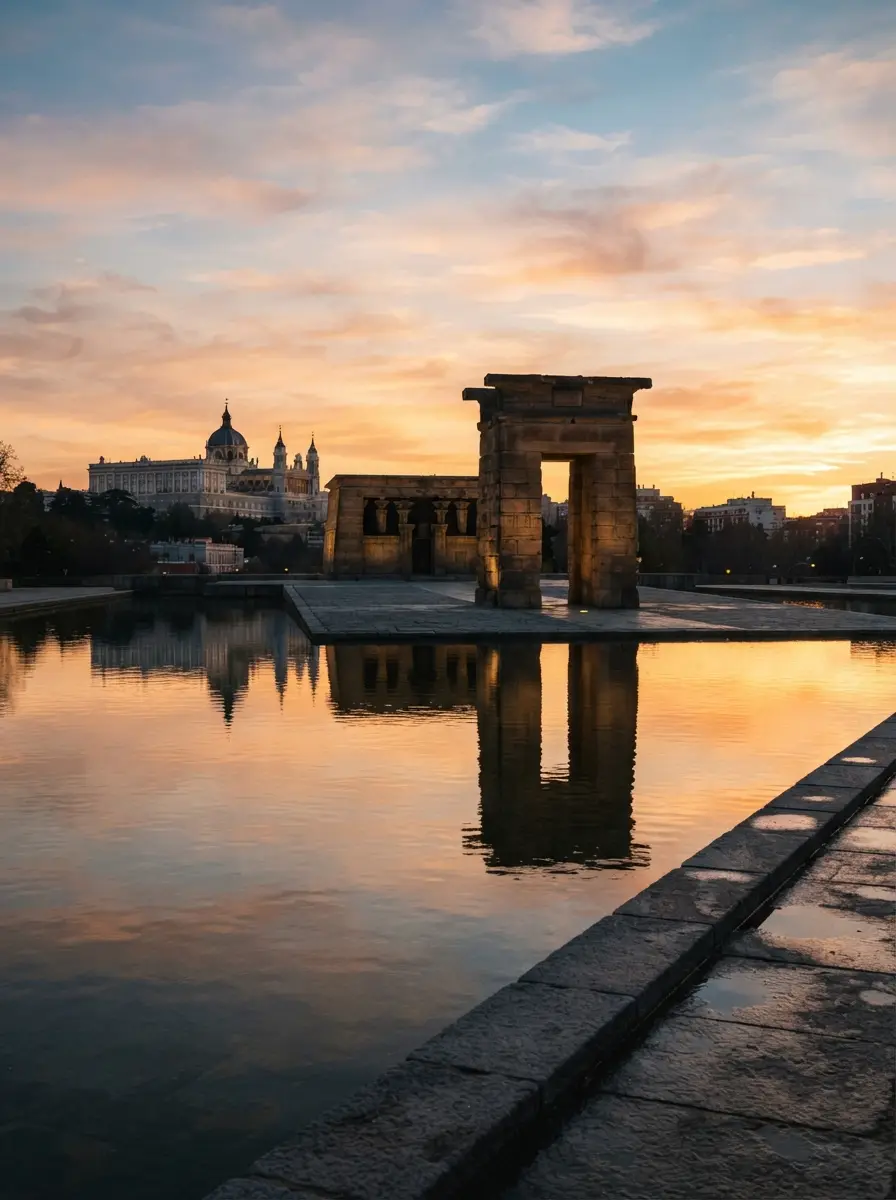
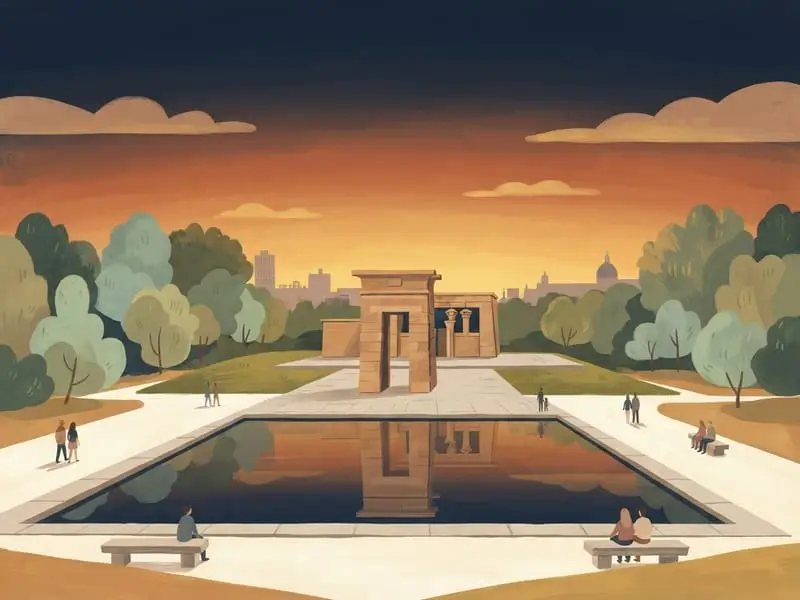
FREEA 2,200 year old Egyptian temple, given to Spain in 1968 for helping save Abu Simbel and rebuilt stone by stone on a hill west of Plaza de España. The terrace behind it faces the Royal Palace and the sunset.
 FREE
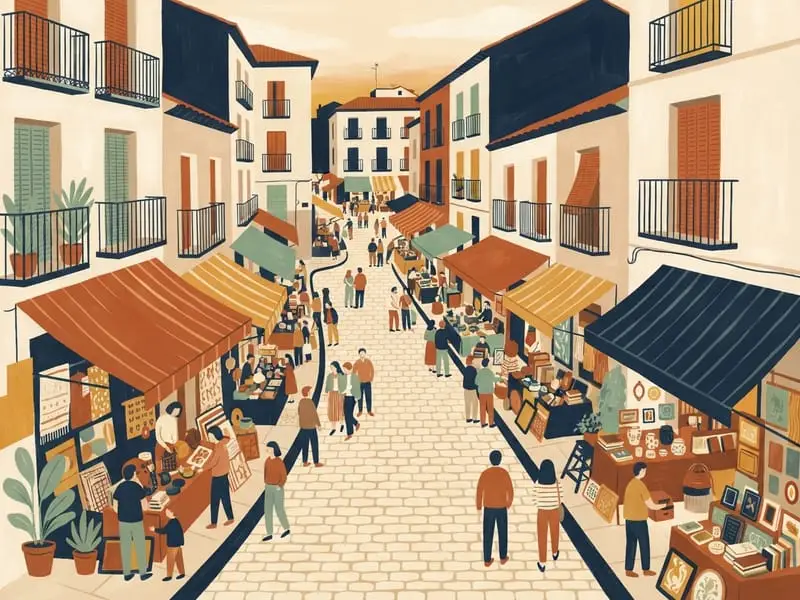
FREEMadrid's Sunday street market, on record since 1740, with more than 1,000 stalls running downhill from Plaza de Cascorro. The antiques and junk are in the side streets, the cheap clothes on the main one.
 FREE
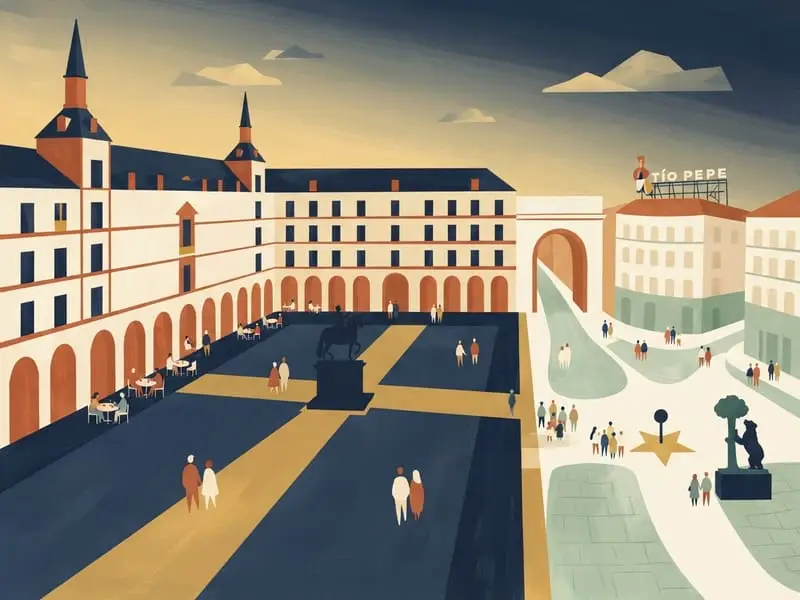
FREEThe arcaded 17th century square that held markets, bullfights and executions, and five minutes east the plaza where every Spanish road is measured from. Between them runs Calle Mayor, the old spine of the city.
 FREE
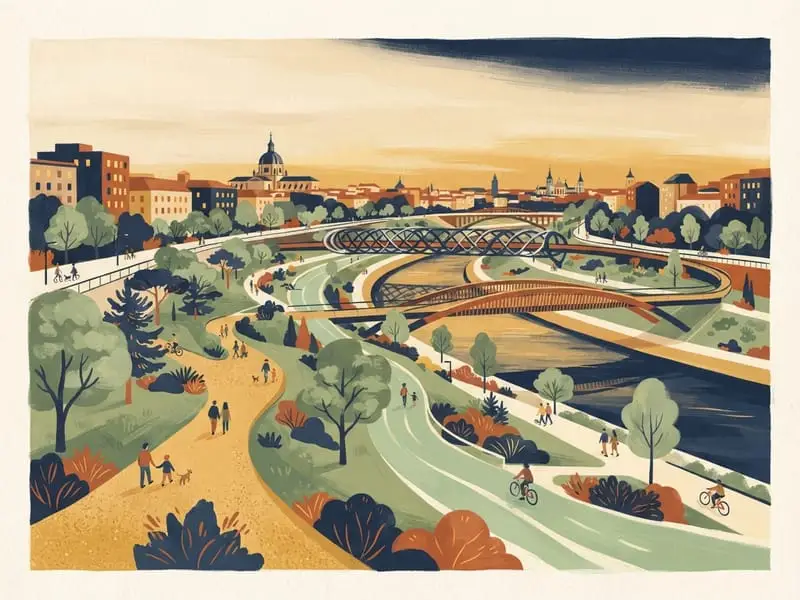
FREEA riverside park built over a buried motorway in 2011, running for several kilometres along the Manzanares. It has the best playgrounds in the city, long cycling paths and a line of old and new bridges.
 FREE
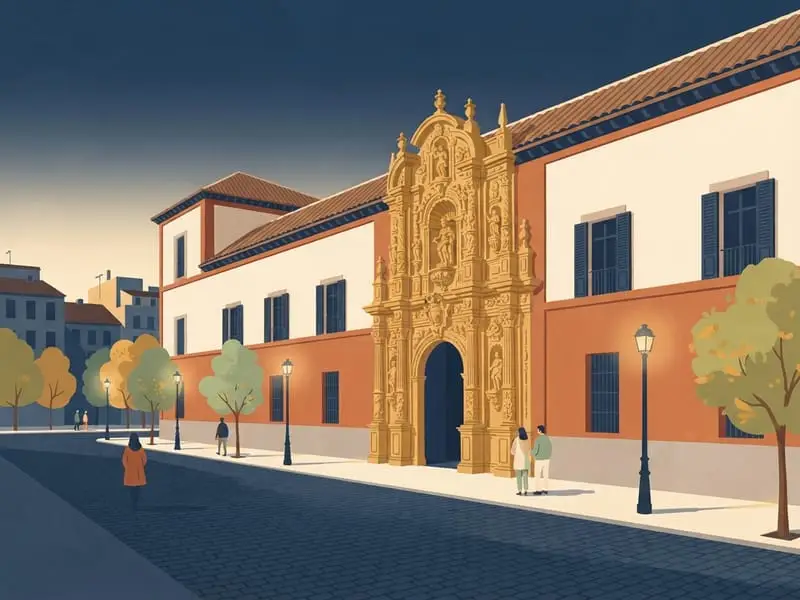
FREEThe city museum, in an 18th century hospice with a wildly carved baroque doorway on Calle de Fuencarral. Inside is a huge 1830 scale model of Madrid, Goya's Allegory of the City and old maps.
 FREE
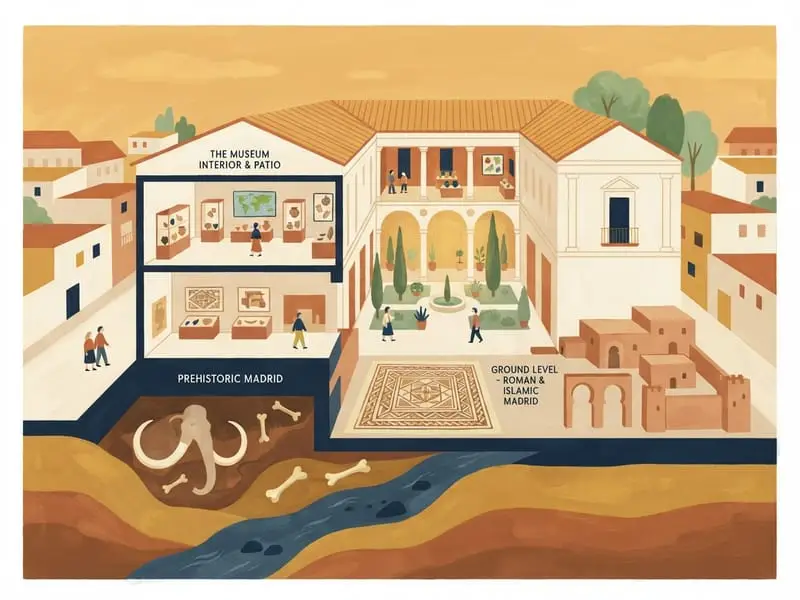
FREEMadrid before it was a capital: mammoth bones from the Manzanares, Roman mosaics and the Moorish town. It stands on the house where the city's patron saint, Isidro, is said to have lived, with the well of his best-known miracle.
 FREE
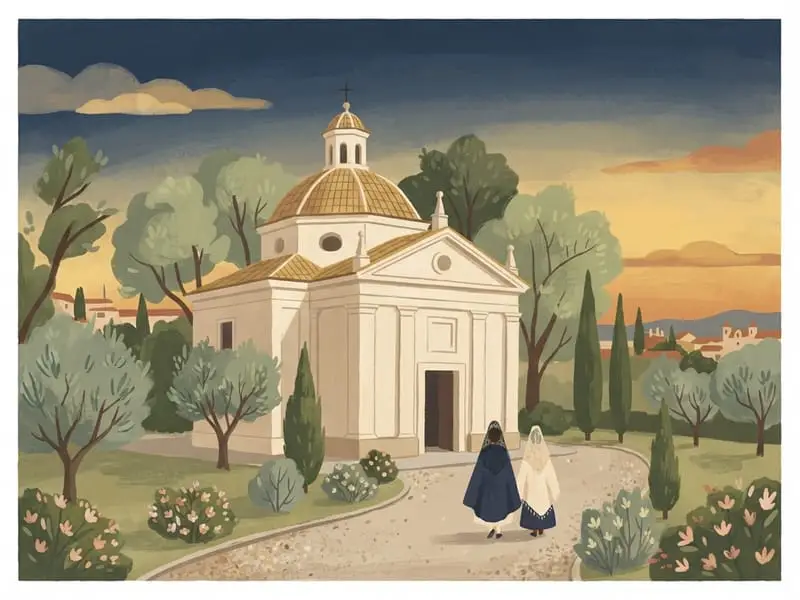
FREEA small chapel whose dome and vaults Goya painted in 1798, with angels that look like Madrid women of the day. Goya is buried under the floor.
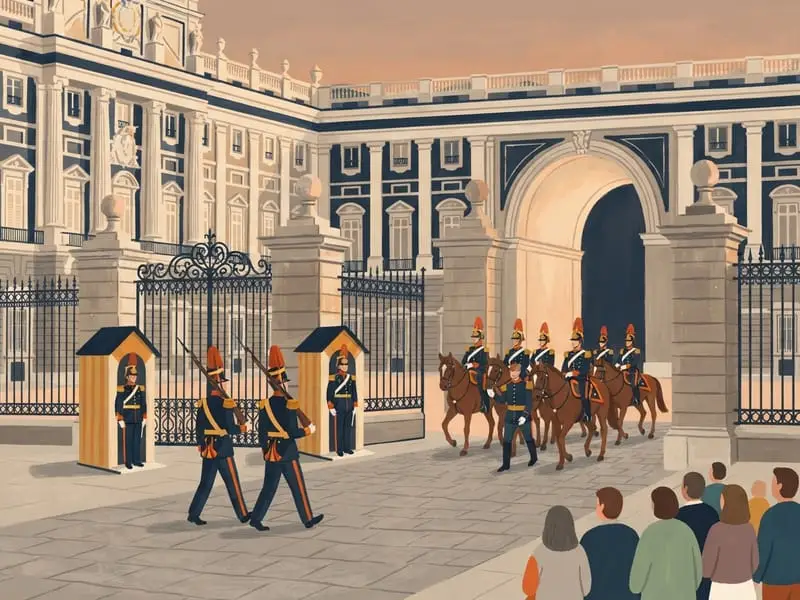 FREE
FREERoyal Guard sentries on foot and horseback, in 19th century uniform, swapping posts at the palace gate. On the first Wednesday of most months the full Solemn Changing fills the parade ground with infantry, cavalry and a band.
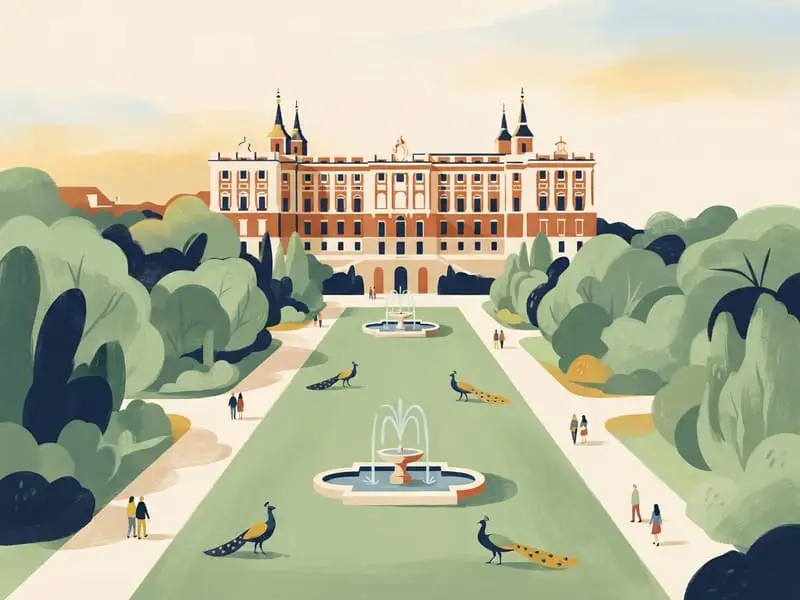 FREE
FREEThe palace's own English-style garden, on the slope below its west front, with peacocks, two fountains and a long lawn aimed straight at the facade. Far fewer people come here than to the Sabatini Gardens on the north side.
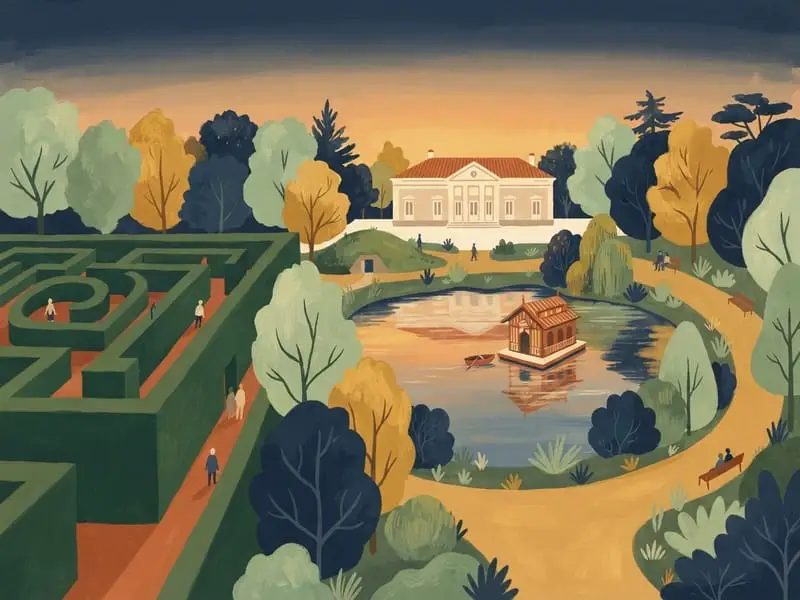 FREE
FREEA private garden built by the Duchess of Osuna from 1787, with a hedge maze, a small palace, a lake with a boathouse and a Civil War bunker underneath. Many locals call it the most beautiful park in the city, and it only opens at weekends.
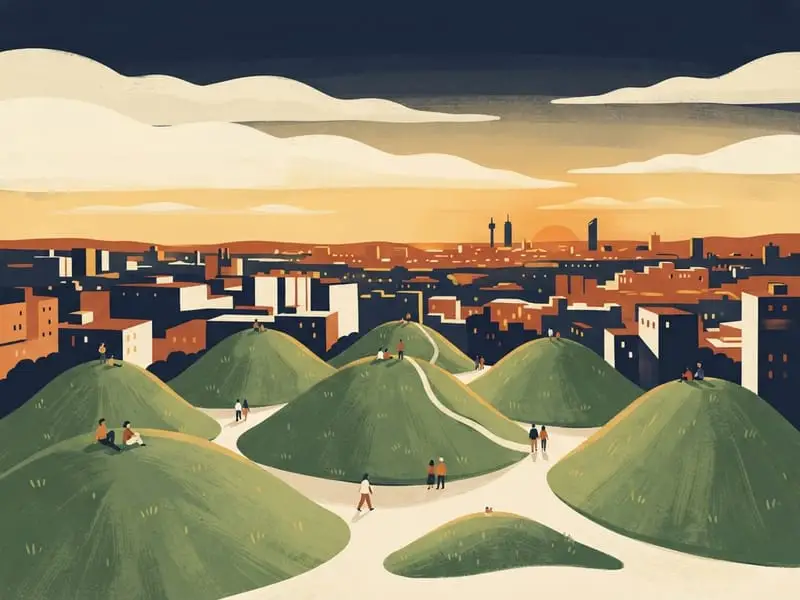 FREE
FREESeven grass mounds in a working-class district south-east of the centre, known to everyone as the Parque de las Siete Tetas. From the top you get the whole skyline, from the Four Towers to the Telefónica building, with the sun setting behind it.
 FREE
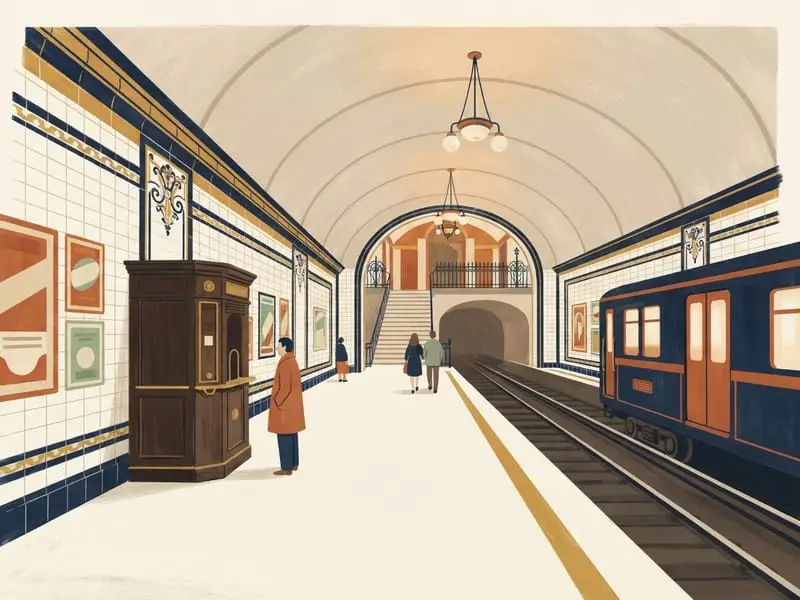
FREEA 1919 metro station closed in 1966 and left sealed for forty years, now restored with its white tiles, wooden ticket booths and ceramic adverts from the 1920s. Line 1 trains still run through without stopping.
 FREE
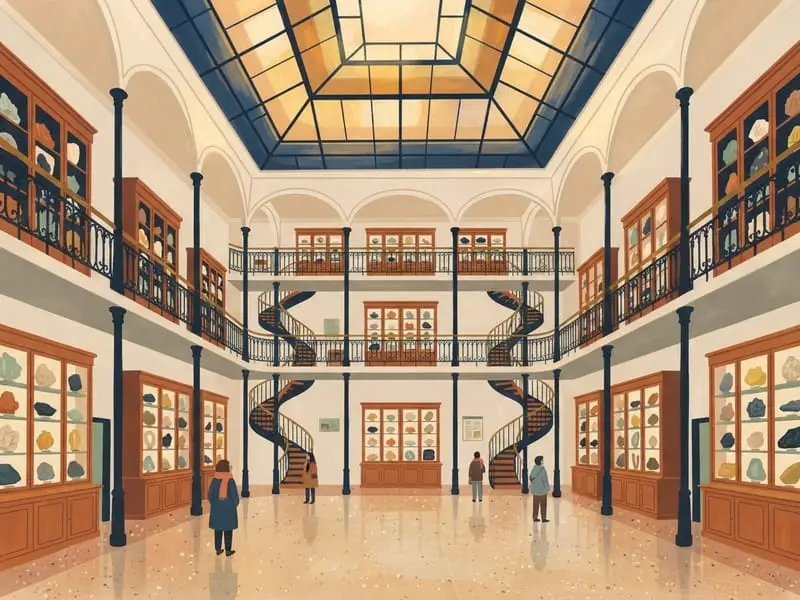
FREEMinerals, fossils and meteorites shown in tall wooden cabinets on three iron balconies under a stained-glass roof, inside the Geological Survey's 1920s headquarters. The room is as much the exhibit as the rocks.
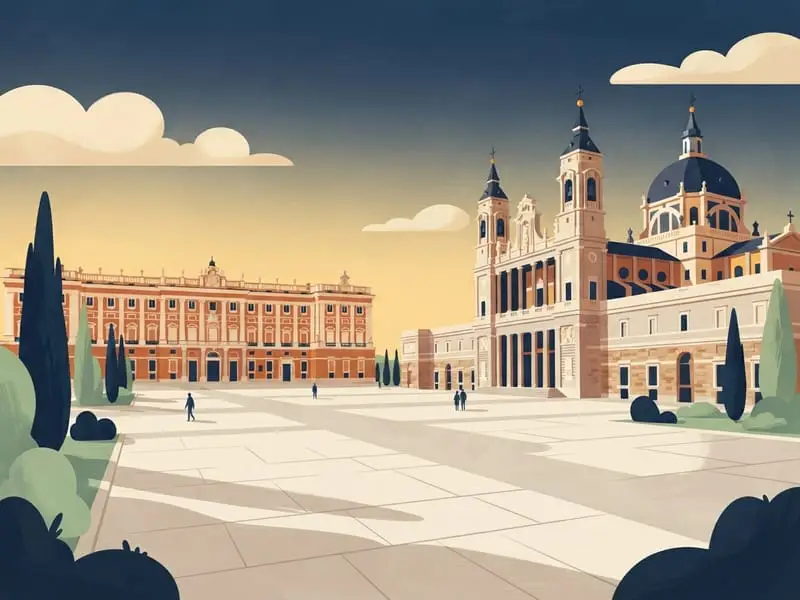
Madrid's cathedral, facing the Royal Palace across a wide courtyard. It was started in 1883 and only finished in 1993, which explains the grey neoclassical outside and the bright modern ceilings inside.
 FREE
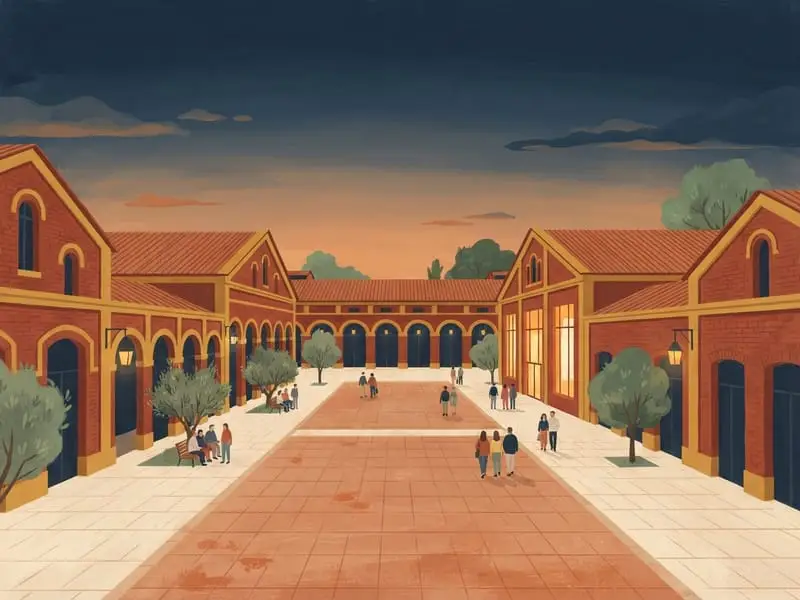
FREEThe city's old slaughterhouse, a set of 1911 brick sheds turned into an arts centre with exhibitions, a cinema, a design hall and a big open plaza. Walking in and most of the exhibitions cost nothing.
 FREE
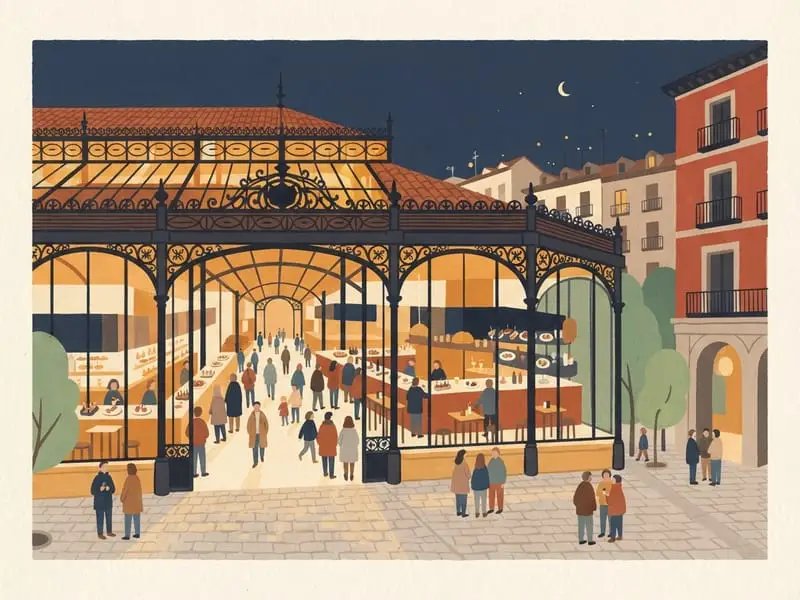
FREEA cast-iron and glass market hall from 1916 beside Plaza Mayor, now a food court of tapas counters. Entry is free and the building is lovely. Everything inside is sold at tourist prices.
Mostly museums. The free window, who it applies to and the booking rule are on each card.
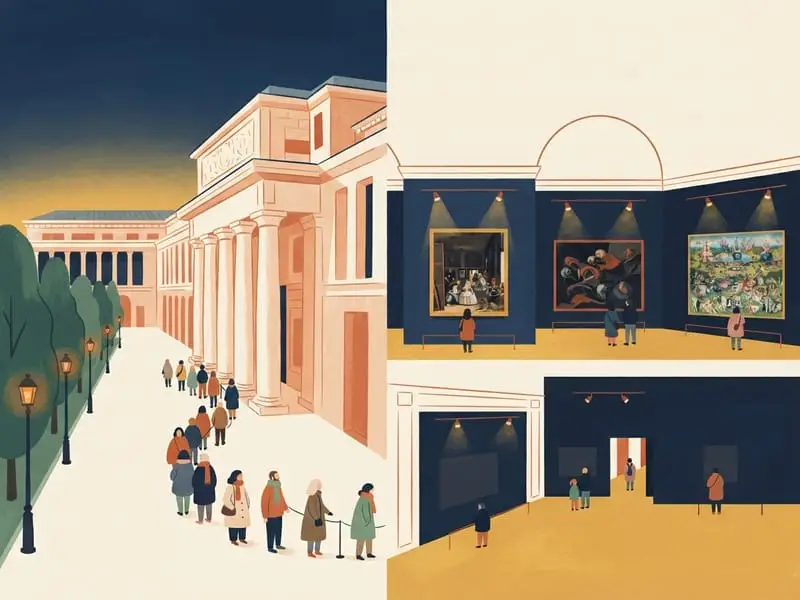
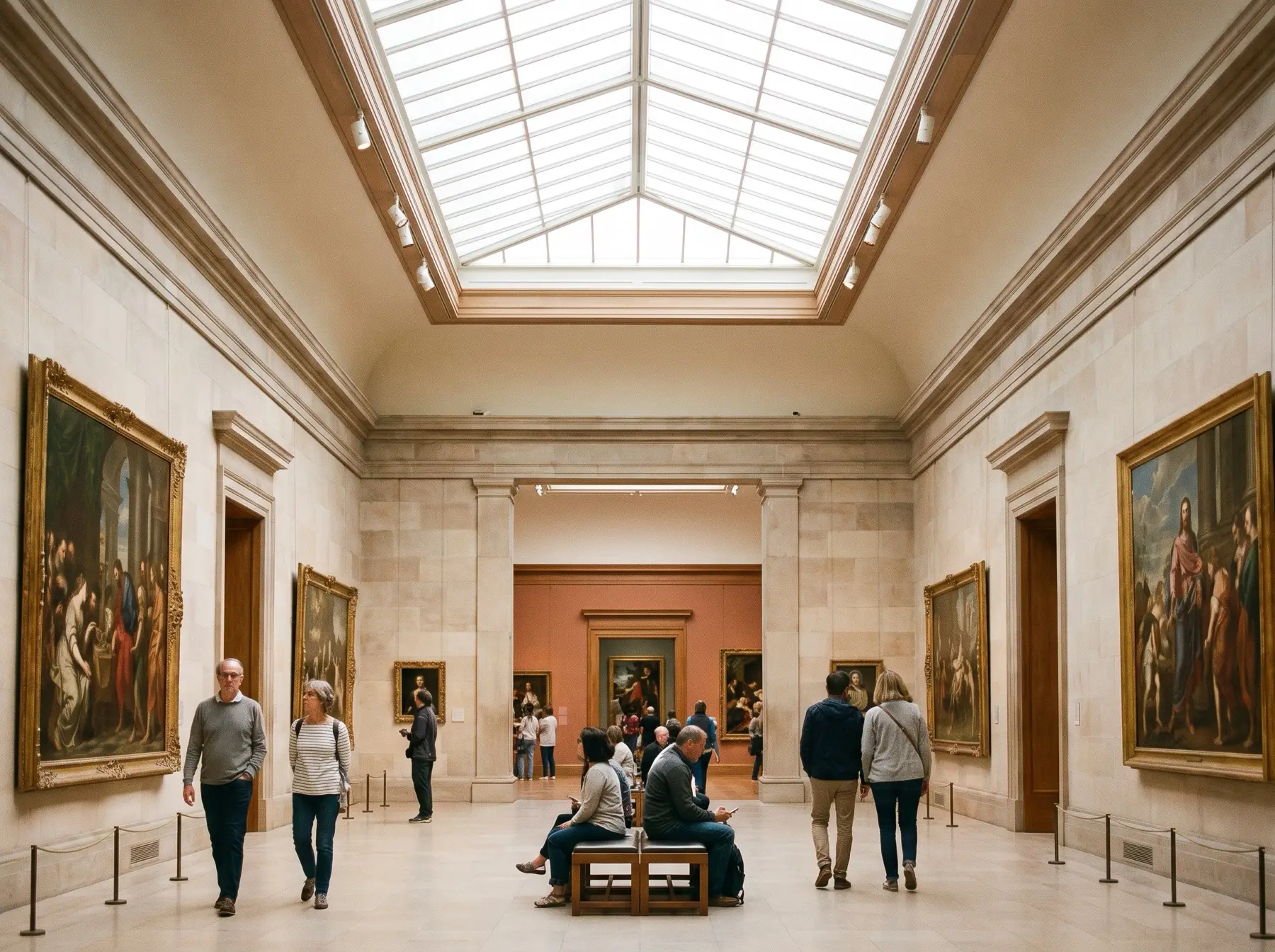
Velázquez's Las Meninas, Goya's Black Paintings and Bosch's Garden of Earthly Delights, free for the last two hours of every day. A normal ticket is €15.
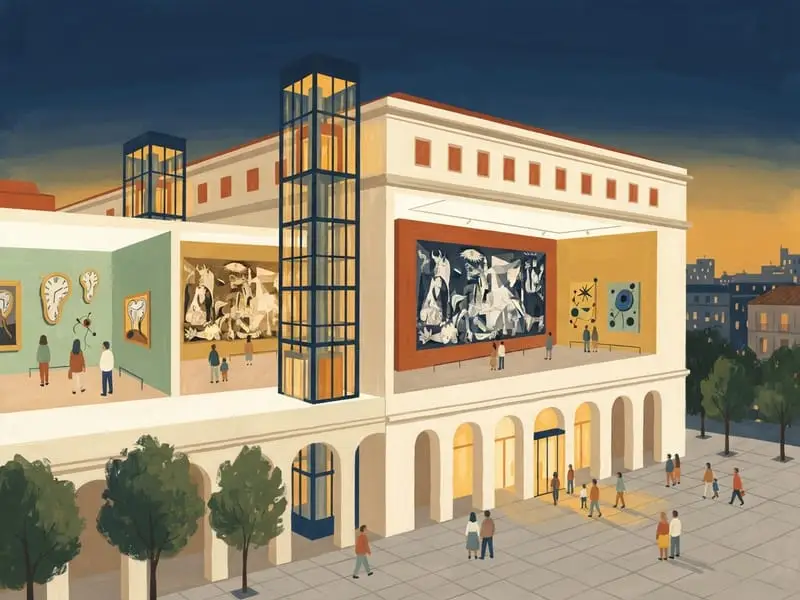
Spain's modern art museum, built around Picasso's Guernica, with Dalí and Miró in the rooms beside it. It opens free for the last two hours on every day it is open.
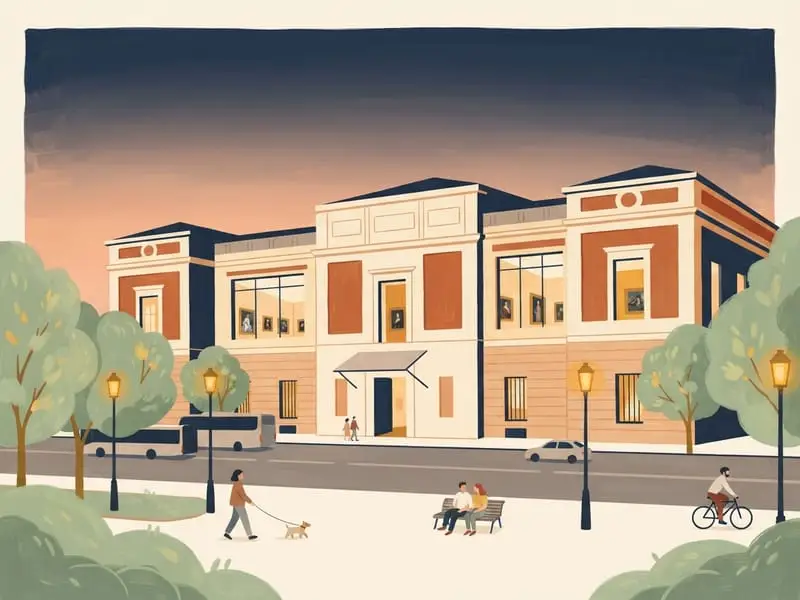
A private collection turned national museum that fills the gaps the Prado leaves: Van Eyck to Hopper, with a strong run of Impressionists. On Mondays the whole opening window is free.
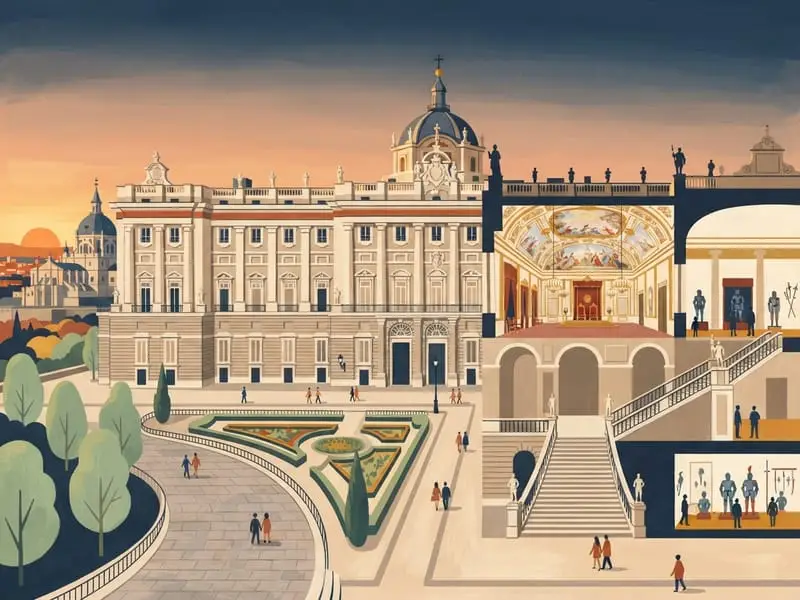
The official residence of the Spanish crown, with the Throne Room under a Tiepolo ceiling, a grand main staircase and the Royal Armoury. The last two hours from Monday to Thursday are free for a defined group of nationalities.
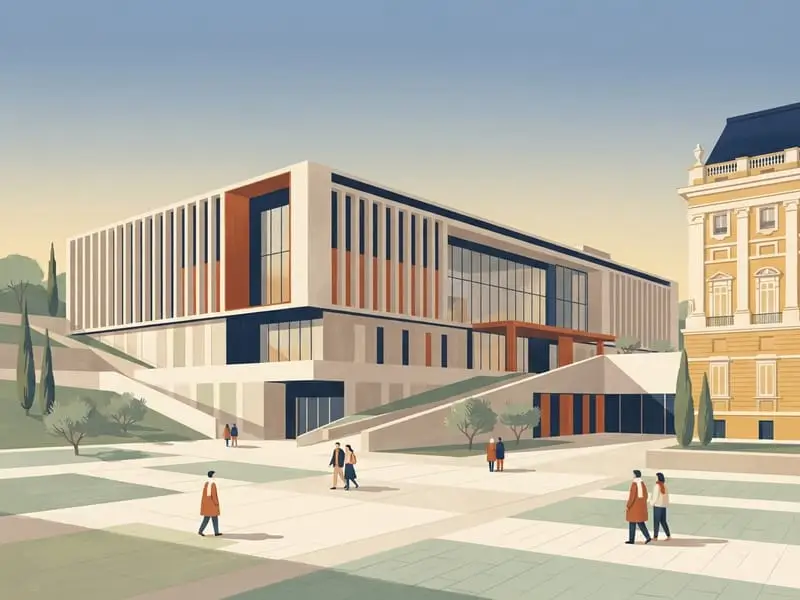
The newest big museum in Madrid, opened in 2023 beside the palace, showing what the Habsburg and Bourbon kings collected: tapestries, carriages, Velázquez, Caravaggio. It runs the same nationality-based free slot as the palace, two hours later.
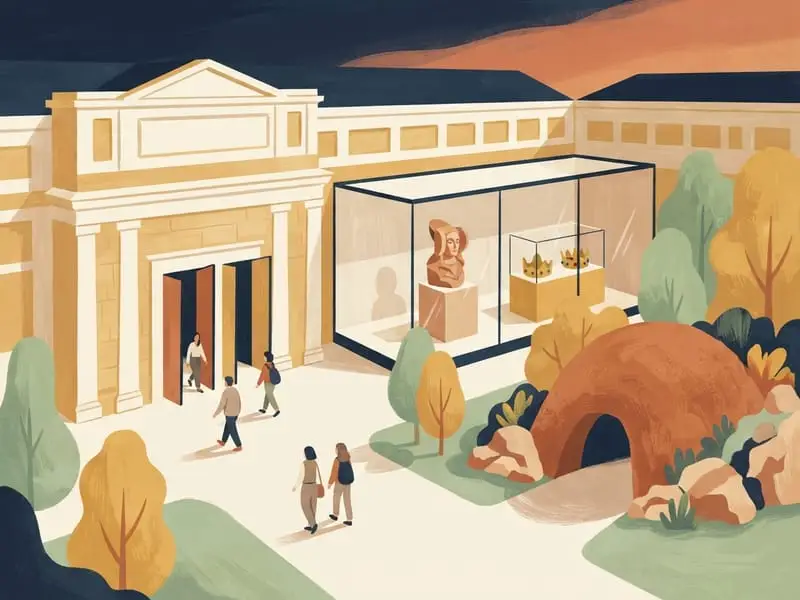
Spain from prehistory to the 19th century in one building, with the Lady of Elche, Visigothic gold crowns and a walk-in copy of the Altamira cave in the garden. Full price is only €3, and weekends cut that to nothing.
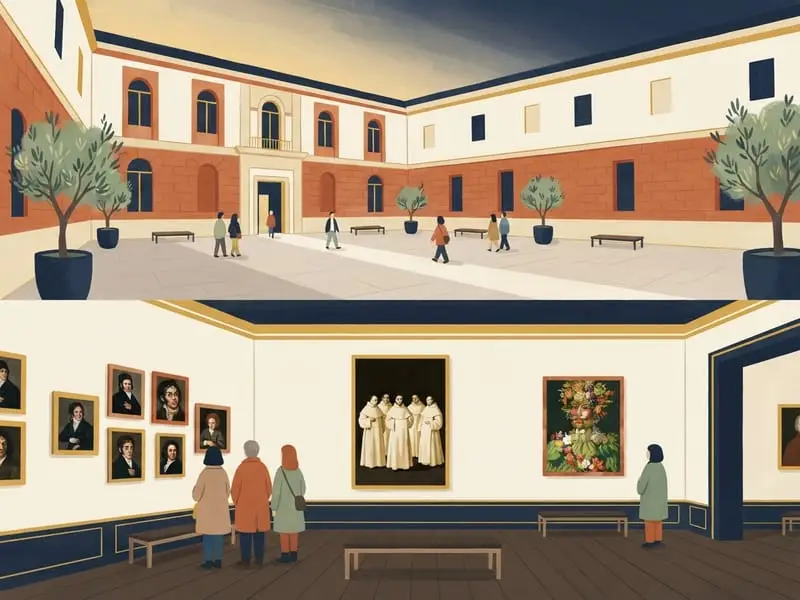
The academy where Goya taught and Picasso and Dalí studied, with thirteen Goyas, Zurbarán's white-robed monks and Arcimboldo's Spring. Almost nobody visits, and it is five minutes from Sol.
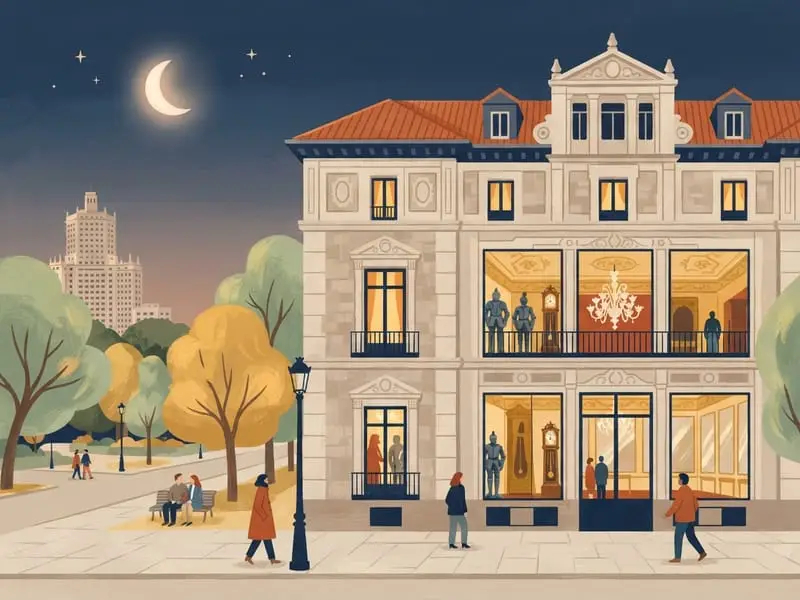
The mansion of a 19th century marquis left exactly as he lived in it, crammed with armour, clocks, Murano chandeliers and a ballroom lined with mirrors. It shows how Madrid's aristocracy lived better than any palace tour.
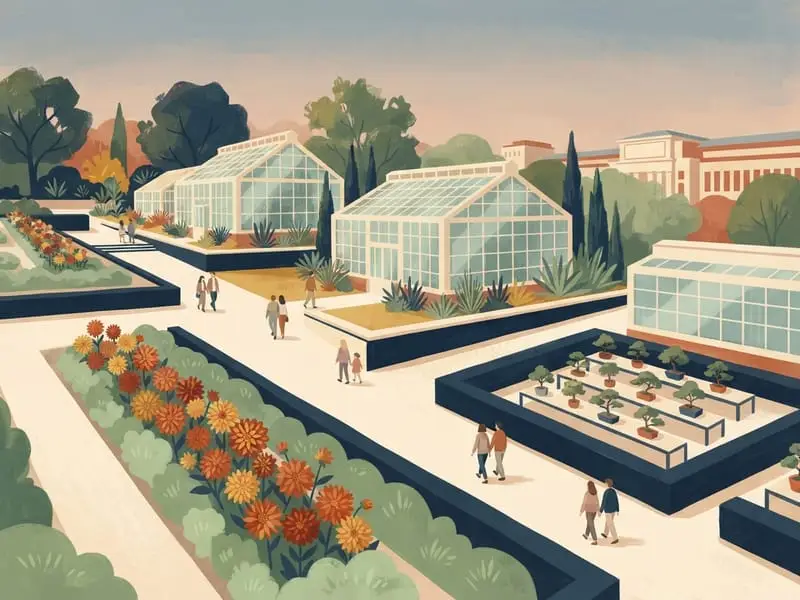
Eight hectares of terraced garden beside the Prado, laid out in 1781, with a bonsai collection, old glasshouses and a dahlia border. The normal ticket is €4.
They cost a little and give back a lot. Never mixed into the free lists.
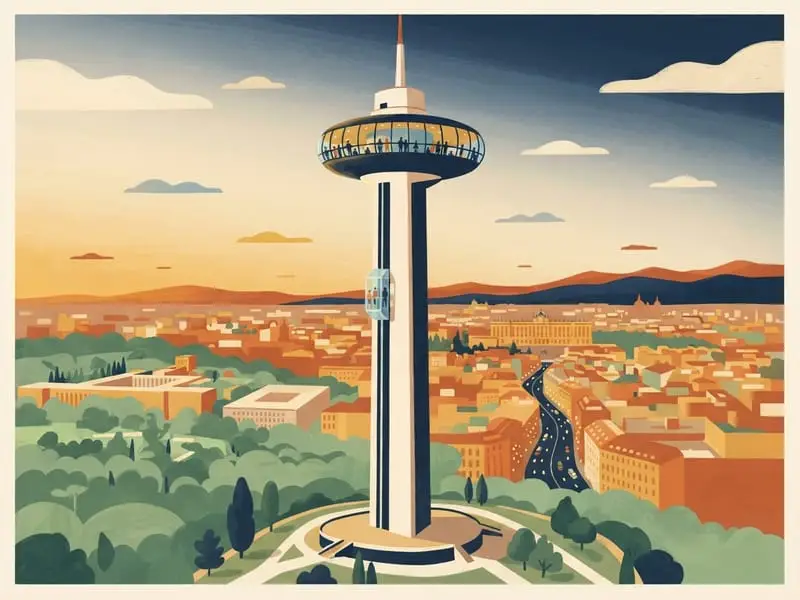 €4
€4A former lighting tower with a glass lift up to a curved viewing gallery over the university, the palace, Gran Vía and the mountains. Open Tuesday to Sunday 9:30–20:00.
The cheapest high view in Madrid. Tickets are for a set time and a 30 minute stay, so buy for the half hour before sunset. It closes in bad weather.
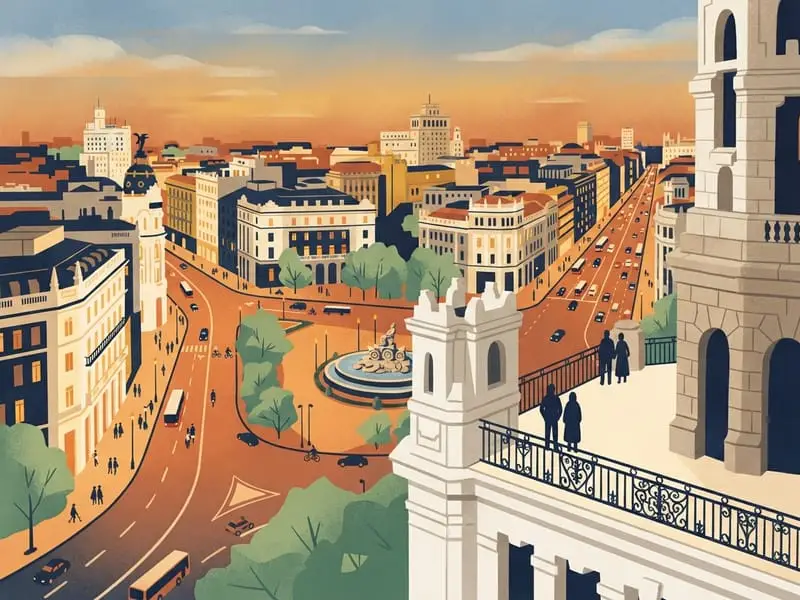 €4
€4The terrace on the tower of the old post office palace, straight above the Cibeles fountain and looking down Calle de Alcalá and Gran Vía. Tuesday to Sunday 10:30–14:00 and 16:00–19:30, entry every 30 minutes.
Buy at the desk on floor 2 to avoid the €0.50 online fee. The building itself, CentroCentro, is free to walk into and has free exhibitions.
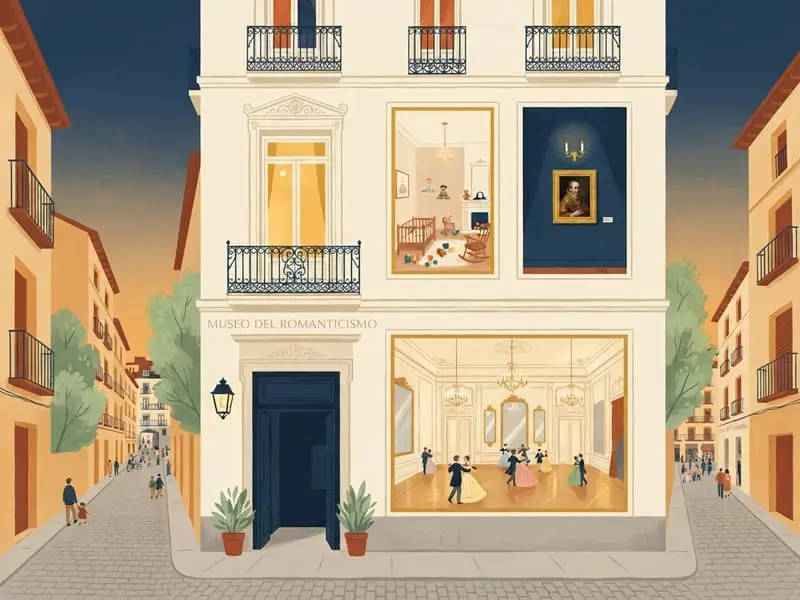 €3
€3A furnished 19th century town house off Calle de Fuencarral, with a ballroom, a nursery and Goya's small St Gregory. It is free on Saturdays from 14:00 and on Sundays.
At €3 on any other day it costs less than a coffee nearby, and it is rarely busy on weekdays. The same price applies at the Cerralbo and the Archaeological Museum.
What you can eat or drink for nothing, and the local classics that cost very little.
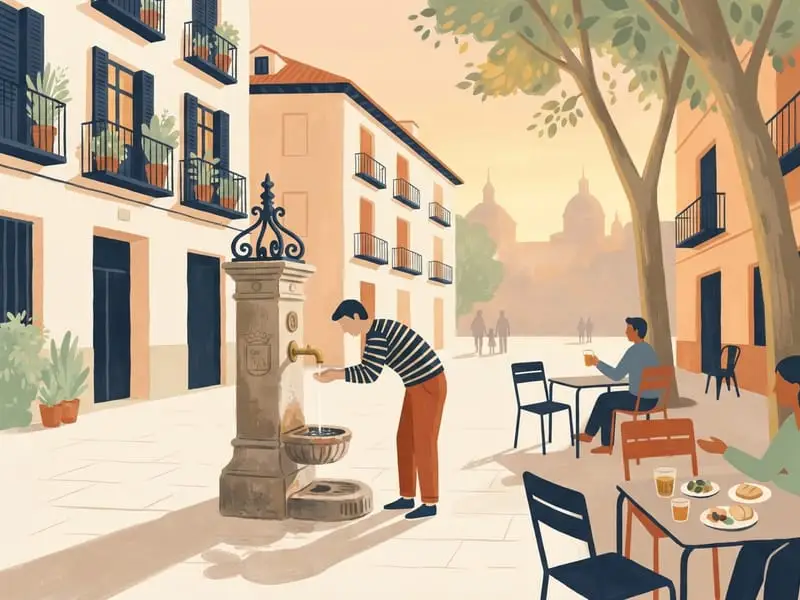 Free
FreeMadrid's tap water comes from granite mountain reservoirs and tastes better than most bottled water. The city maps every public drinking fountain in streets and parks, and shows the nearest one in its Madrid Móvil app.
All year. Many park fountains are shut off in winter frosts.
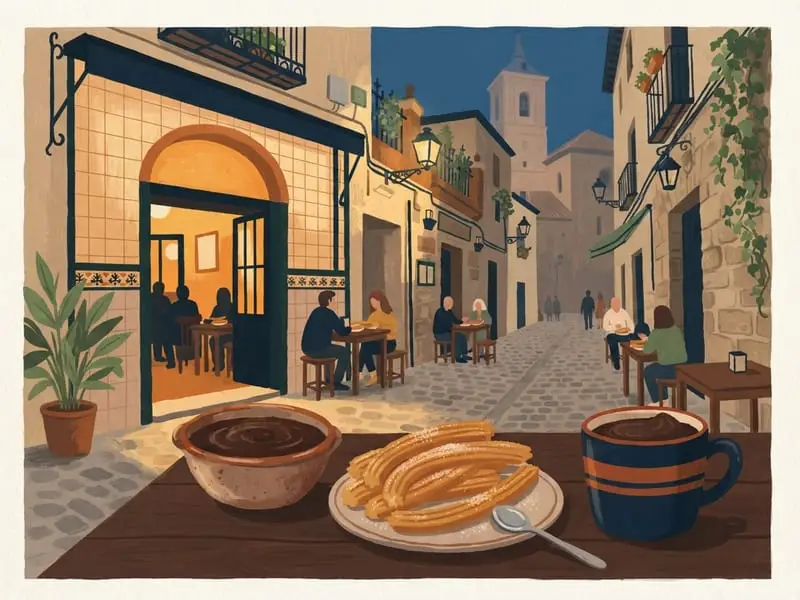 €2.50
€2.50Six churros or two fat porras for €2.50 at the chocolate house open since 1894, in the alley behind San Ginés church. The cup of thick hot chocolate to dip them in is €3.70 more.
Open daily. Shortest lines before 10:00 on weekdays.
Source: Chocolatería San Ginés
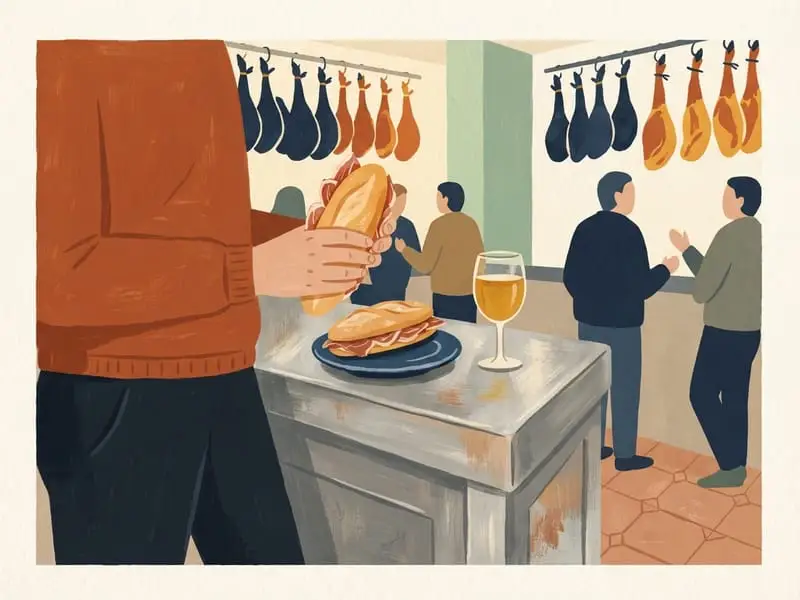 €3.90
€3.90A crusty roll filled with cured ham, eaten standing at a steel bar under rows of hanging legs. The cheese, chorizo or salchichón version is €3.50 and a small beer is €2.20.
Daily, from breakfast to late evening. Prices are from the chain's published bar menu.
Source: Museo del Jamón
What opens, what closes and which free events come back each year.
Monday to Saturday from 18:00 to 20:00, and Sundays and public holidays from 17:00 to 19:00, for everyone. The full ticket is €15. Expect a line along the Goya entrance from about 45 minutes before.
Only Monday to Thursday in the last two hours (16:00–18:00 from October to March, 17:00–19:00 from April to September), and only for citizens or residents of the EU and citizens of Latin American countries with ID. Tickets are given at the ticket office, not online. Other visitors pay €18.
You need a ticket even when it is free. You can book it on the museum's website or collect it at the desk. Free hours are 19:00–21:00 on Monday and Wednesday to Saturday, and 12:30–14:30 on Sunday.
The Thyssen from 12:00 to 16:00, the Prado from 18:00, the Reina Sofía from 19:00, the Geomineral Museum in the morning, and for EU and Latin American citizens the Royal Palace and Royal Collections Gallery. City museums and the Temple of Debod interior are closed.
Yes, every day, from 6:00 to midnight between April and September and until 22:00 the rest of the year. The Palacio de Cristal inside it is closed for restoration.
Nothing free in Madrid stands in for 80,000 people in the rebuilt Bernabéu on a match night. If tickets are out of reach, a flamenco show in a small tablao is the other thing the city does that no museum slot replaces. Either way, book direct with the club or the venue, not a reseller.
Everything above is free. This is the only paid pick on the page, chosen because no free option replaces it.
See tickets and prices