Paris Free Walking Tour
2h45 · rated 9.3/10 in 1,061 reviews
Guided in English
Reserve a spotParis charges for its headline museums and gives away more than most visitors expect. The city runs its own network of museums, and their permanent collections cost nothing on any open day: the Petit Palais, Carnavalet, the Musée d'Art Moderne and several smaller houses. Notre-Dame is free, so is Sacré-Cœur, and so is the roof of Galeries Lafayette. The national museums are the tricky part. Orsay and the Orangerie open free on the first Sunday of each month but only with a booked slot, the Louvre moved its free slot to the first Friday evening, and several monuments are free on first Sundays in winter only. The details below are what the ticket desk will actually apply.
These have no fixed price. You reserve a spot, and at the end you tip the guide what you think the tour was worth.
2h45 · rated 9.3/10 in 1,061 reviews
Guided in English
Reserve a spot2h45 · rated 9.5/10 in 831 reviews
Guided in English
Reserve a spot2h · rated 9/10 in 63 reviews
Guided in English
Reserve a spotSpots are booked through Civitatis.
Open to everyone, every day they are open. No ticket to buy.
The cathedral reopened in December 2024 with cleaned stone that is paler than anyone alive remembers. The nave, the rose windows and the new liturgical furniture are all free to see.
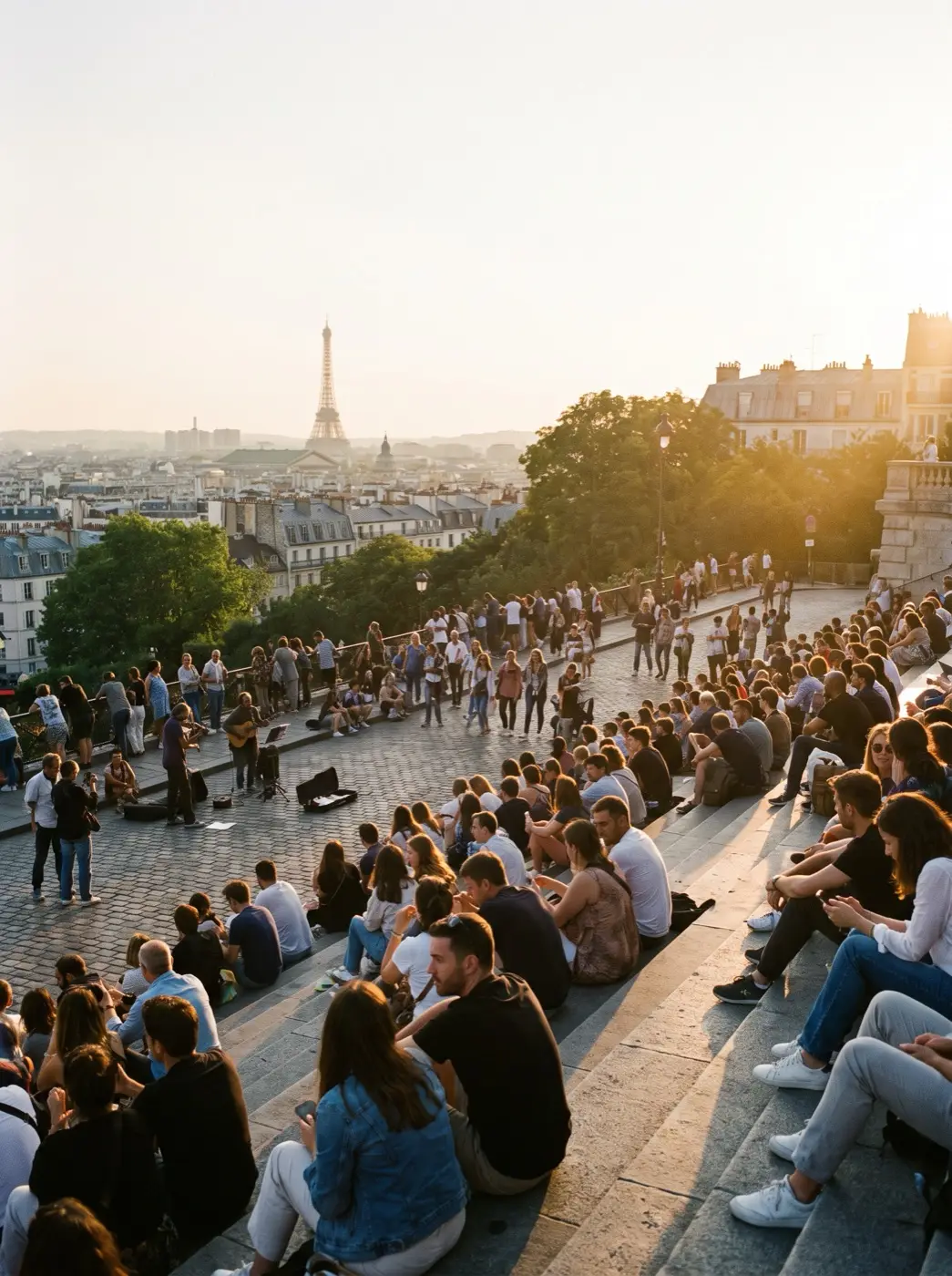
A white basilica on the highest hill in Paris, with a huge gold mosaic inside and the whole city laid out below the front steps. The view from the steps costs nothing; only the dome climb is paid.
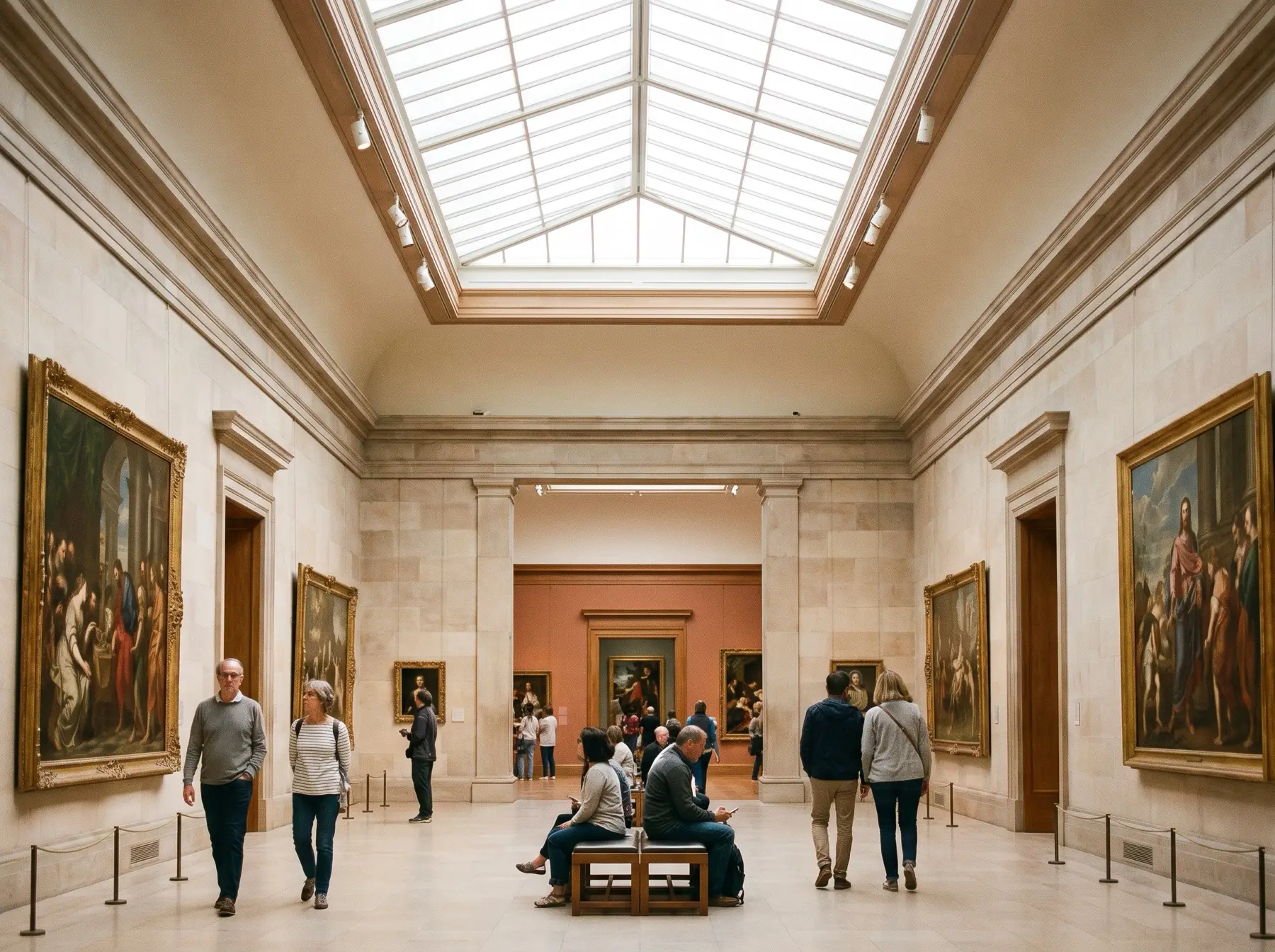
The city's fine arts museum, in a 1900 exhibition palace with painted ceilings and a courtyard garden. Monet, Courbet, Rembrandt and a full Guimard dining room, with no ticket.
The museum of the history of Paris, spread through two Marais mansions. Old shop signs, Revolution relics, Proust's bedroom and an entire Art Nouveau jewellery shop rebuilt inside.
The city's modern art collection in the east wing of the Palais de Tokyo building. Two versions of Matisse's La Danse and Dufy's room-sized mural on electricity are the reasons to come.
The studios and gardens where sculptor Antoine Bourdelle worked, left much as they were, with monumental bronzes standing among the trees. Rodin's assistant, a fraction of Rodin's crowds.
The Occupation and the August 1944 uprising, told through General Leclerc and Jean Moulin, in a pavilion across the square from the Catacombs entrance. Twenty metres below sits the bunker that served as the Resistance command post.
A green-shuttered 1830s house at the end of a cobbled lane, once painter Ary Scheffer's home, where Chopin and George Sand came on Fridays. It reopened in February 2026 after a full restoration.
France's Holocaust museum and archive. The Wall of Names in the forecourt lists the 76,000 Jews deported from France, and the permanent exhibition below follows what happened to them.
The great oval reading room of the old National Library, glass roof, iron columns and open shelves that include a large comics collection. Since the 2022 restoration anyone can walk in and sit down.
The roof of the department store, eight floors up, looks over the back of the Opéra Garnier to the Eiffel Tower and across to Sacré-Cœur. On the way, the 1912 stained-glass dome over the perfume hall is worth a stop of its own.
Forty-four hectares of cobbled lanes, mossy chapels and famous graves on a hillside in the east: Oscar Wilde, Jim Morrison, Chopin, Édith Piaf, Proust.
The Senate's garden: a formal basin where children push wooden sailboats, the shaded Medici Fountain, an orchard, chess tables, and green metal chairs you can drag wherever you like.
An enclosed garden ringed by arcades, two minutes from the Louvre and far quieter. Daniel Buren's black and white striped columns fill the first courtyard and children climb all over them.
A terraced park on the Belleville hill with a belvedere at the top that takes in the whole city, Eiffel Tower included. Locals outnumber visitors by a wide margin.
A 4.5 km planted walkway on a disused railway line, opened in 1988, long before New York's High Line. The first stretch runs on a brick viaduct above Avenue Daumesnil at third-floor height.
A canal finished in 1825, lined with plane trees and crossed by arched iron footbridges. Barges rise and fall through the locks while people sit along the edge with their legs over the water.
Glass-roofed shopping arcades from the early 1800s. Galerie Vivienne (1823) has the mosaic floor and the old bookshop; ten minutes north, Passage des Panoramas (1799), Jouffroy and Verdeau run end to end across the boulevard.
The eighteenth-century art collection of the founders of La Samaritaine, hung in a Marais townhouse: Fragonard, Boucher, Canaletto, snuffboxes and panelled salons.
A steep 25-hectare park built in 1867 in an old quarry, with cliffs, a lake and lawns you are allowed to lie on, which is rare in Paris.
Mostly museums. The free window, who it applies to and the booking rule are on each card.
On any open day the Louvre is free for everyone under 18 and for 18 to 25 year olds from the European Economic Area. Orsay, the Orangerie and the other national museums apply the same rule.
Two oval rooms built for Monet's eight Water Lilies panels, with a compact collection of Cézanne, Renoir, Modigliani and Soutine downstairs.
The largest public collection of Picasso's work, the pieces he kept for himself, hung in a seventeenth-century Marais mansion.
Rodin's sculptures in the mansion where he worked, with The Thinker and The Gates of Hell outdoors in a large garden.
The terrace on top of the arch, 284 steps up, looks straight down twelve avenues with the Eiffel Tower to one side. Standing under the arch at street level is always free; the roof is free on five Sundays a year.
The Louvre no longer does free first Sundays. Its free slot for all visitors is the first Friday of the month from 18:00 until closing at 21:00.
The Impressionist collection in the old Orsay railway station: Monet, Renoir, Degas, Van Gogh's self-portrait. Free for all on the first Sunday of every month.
The domed temple where France buries its heroes: Voltaire, Hugo, Marie Curie, Josephine Baker. Foucault's pendulum swings under the dome and the crypt runs beneath the whole building.
No. The Louvre's free slot for everyone is the first Friday of the month after 18:00, except in July and August, plus 14 July. Under-18s and under-26s from the European Economic Area get in free on any open day.
It depends on the museum. Orsay and the Orangerie require a booked time slot. The Picasso museum does not take bookings for free tickets and Rodin needs none, so you queue.
Entry to the cathedral is free for everyone. A free time slot can be reserved on the cathedral's website or app, but it is optional and there is always a line for visitors without one. Only the Treasury and the towers charge.
The permanent collections of the City of Paris museums, including the Petit Palais, Musée Carnavalet, Musée d'Art Moderne de Paris, Musée Bourdelle, Musée Cognacq-Jay, Musée de la Vie Romantique and the Musée de la Libération. The Mémorial de la Shoah is free too.
Citizens of European Economic Area countries aged 18 to 25, and non-citizens of the same age who hold a residence permit there, with photo ID. Under-18s are free whatever their nationality. An American or Brazilian visitor aged 22 pays full price.
The free viewpoints all look at the tower, and none of them puts you inside the ironwork. Climbing the stairs is the cheapest ticket and the best way to see how the thing is built, with the city dropping away between the girders. Go near dusk and stay for the lights on the hour.
Everything above is free. This is the only paid pick on the page, chosen because no free option replaces it.
See tickets and prices