1. Home
  2. Tokyo

Free things to do in Tokyo

Official sources checked Oct 5, 2026

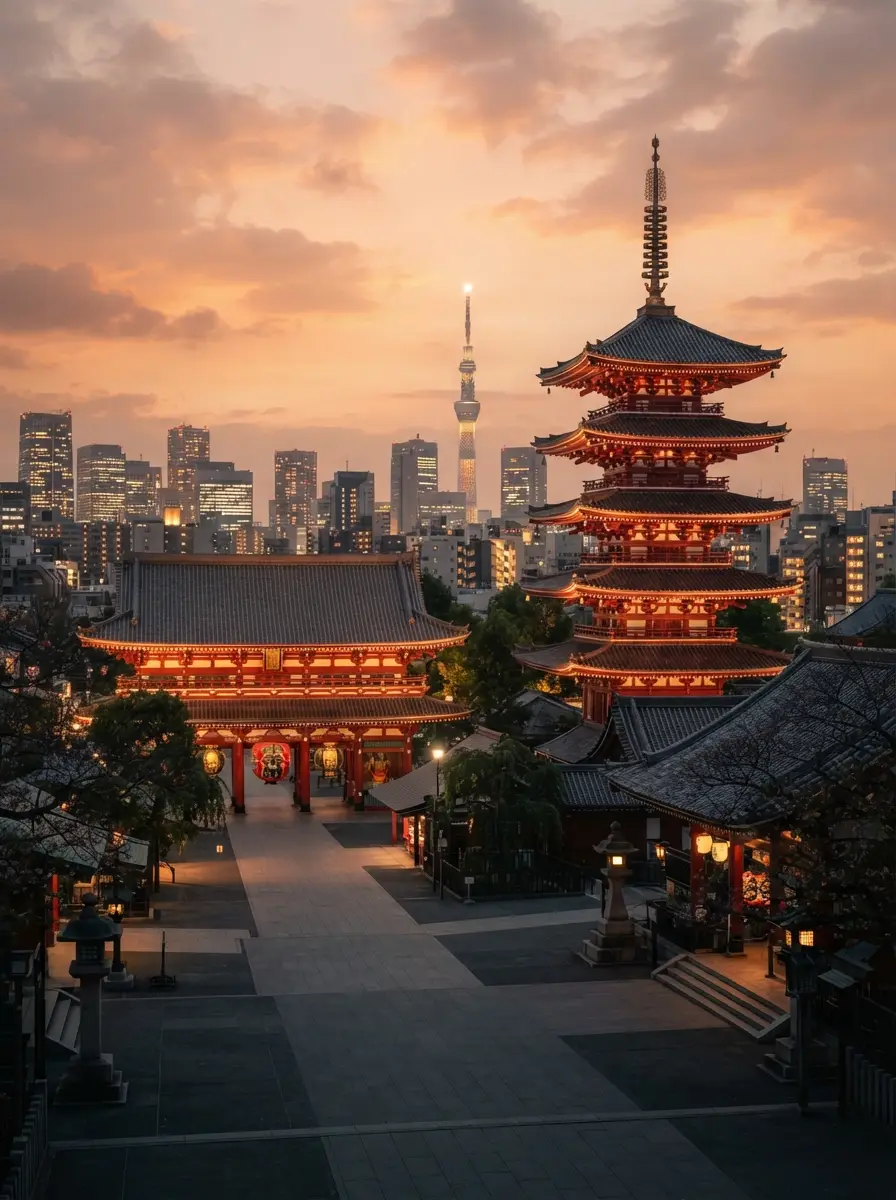
Tokyo is cheaper to enjoy than its reputation suggests, because so much of it is shrines, parks and streets. Senso-ji and Meiji Jingu charge nothing. City hall in Shinjuku runs two observatories 202 meters up with no ticket desk, so a paid deck is optional. The Imperial Palace East Gardens are free four or five days a week, and a handful of odd, good small museums never charge: money at the Bank of Japan, parasites in Meguro, university skeletons beside Tokyo Station. The catch is the calendar. Closing days differ from place to place, shrines shut at sunset, and the big national museums are free only on set dates or for certain ages. Those details are below.
Tokyo
Free day finder

Find your free Tokyo

Day
Weather
With
In the mood for

Free walking tours in Tokyo3

These have no fixed price. You reserve a spot, and at the end you tip the guide what you think the tour was worth.

Tip-based

Shinjuku Free Tour

2h30 · rated 8.5/10 in 1,433 reviews

Guided in English

Reserve a spot
Tip-based

Shibuya Free Walking Tour

2h · rated 8.8/10 in 1,128 reviews

Guided in English

Reserve a spot
Tip-based

Asakusa Free Walking Tour

2h30 · rated 9.2/10 in 679 reviews

Guided in English

Reserve a spot

Spots are booked through Civitatis.

Always free in Tokyo23

Open to everyone, every day they are open. No ticket to buy.
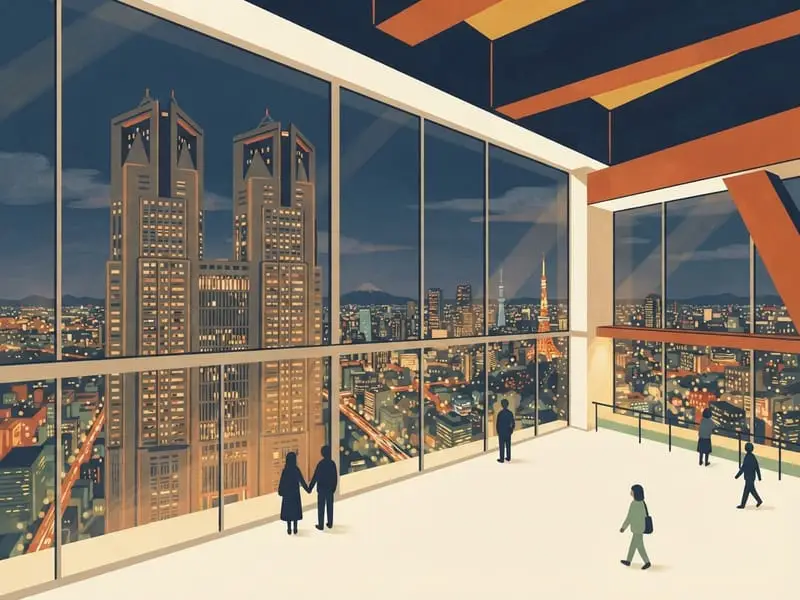
Illustration: Tokyo Metropolitan Government Building observatoriesFREE

Tokyo Metropolitan Government Building observatories

Shinjuku
Always freeIndoorGood with kidsViewsArchitecture

Two observation rooms on the 45th floor of city hall, 202 meters up, with no ticket desk at all. On a clear day the view runs from the Skytree to Mount Fuji.
  • West windows for Mount Fuji on clear winter mornings
  • The public piano in the South room, played by visitors
  • Southeast side for Meiji Jingu's forest and Shinjuku Gyoen
Free when
Always · South room 9:30–22:00 (last entry 21:30), closed 1st and 3rd Tuesday. North room 9:30–17:30, closed 2nd and 4th Monday, and open until 22:00 when the South room is shut. Both closed 29–31 Dec, 2–3 Jan and on building inspection days.
Free for whom
Everyone
Reservation
No reservations taken. Expect a 20 to 30 minute line for the dedicated elevator on the ground floor of Main Building No. 1, after a bag check.
Time needed
45 min to 1h
How to get there
Toei Oedo Line to Tochomae, which exits inside the complex, or a 10 minute walk from the West Exit of JR Shinjuku
Worth it? Yes.The best free view in Tokyo and the reason you can skip a paid deck. Go about 40 minutes before sunset and stay for the lights. Fuji shows mostly on cold, dry mornings from December to February, on the west side.
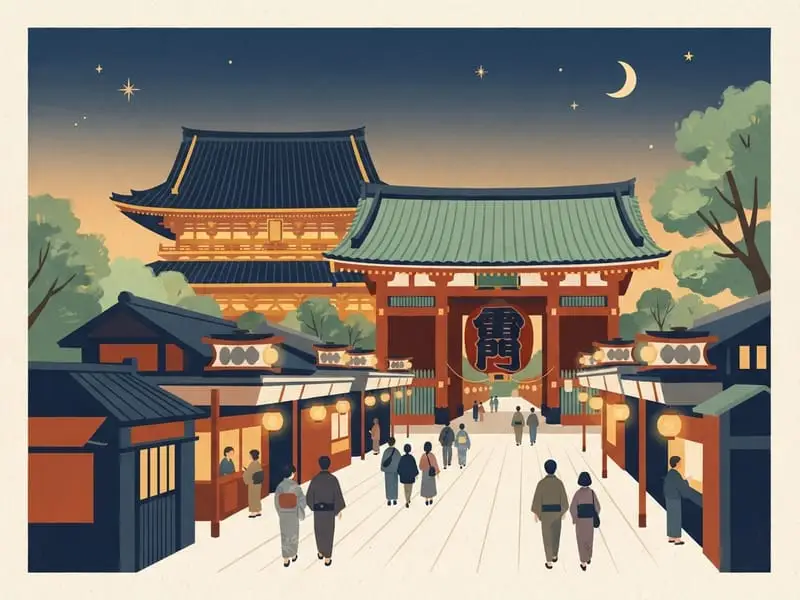
Illustration: Senso-ji TempleFREE

Senso-ji Temple

Asakusa
Always freeGood with kidsHistoryArchitectureLocal life

Tokyo's oldest temple, reached through the Kaminarimon gate with its giant red lantern and the Nakamise shopping street. The grounds never close and entry costs nothing.
  • The big lantern under Kaminarimon, with a carved dragon underneath
  • Painted shutters on Nakamise before the shops open
  • Five-story pagoda lit after dark
Free when
Always · grounds open at all hours. Main hall 6:00–17:00 (from 6:30 October to March).
Free for whom
Everyone
Reservation
Not needed
Time needed
1h
How to get there
Ginza Line or Toei Asakusa Line to Asakusa, 5 minutes on foot
Worth it? Yes.Go before 8:00 or after dark. At midday Nakamise is a slow shuffle, but early on the shop shutters are down and you can see the paintings on them. The buildings stay lit in the evening, when the main hall is closed but the grounds are nearly empty.
Source: Senso-ji · checked Oct 5, 2026Open in Maps
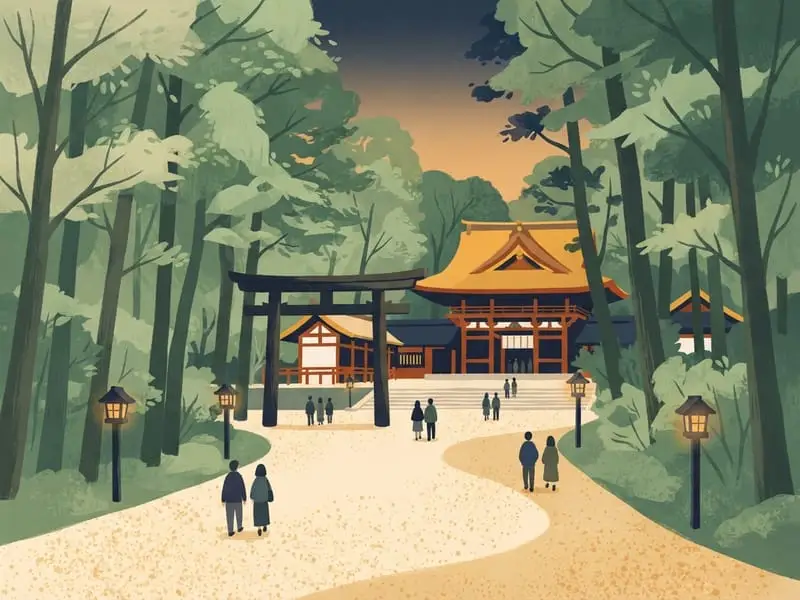
Illustration: Meiji Jingu ShrineFREE

Meiji Jingu Shrine

Harajuku
Always freeGood with kidsHistoryNatureArchitecture

A Shinto shrine at the end of a wide gravel path through a planted forest, five minutes from Harajuku Station. The walk under the trees is half the visit.
  • Wall of painted sake barrels on the main approach
  • The huge cypress torii halfway along the path
  • Wedding processions in the courtyard on weekend mornings
Free when
Always · sunrise to sunset, every day. Roughly 5:00–18:00 in summer, 6:40–16:00 in December, 5:40–16:40 in October.
Free for whom
Everyone. The Inner Garden and the Meiji Jingu Museum are separate paid visits.
Reservation
Not needed
Time needed
1h to 1h30
How to get there
JR Yamanote Line to Harajuku, or Chiyoda and Fukutoshin lines to Meiji-jingumae
Worth it? Yes.Worth it, and better early, when priests are sweeping the gravel. Check the closing time for your month, because the gates shut at sunset and in winter that is around 16:00. On weekend mornings you often see a wedding procession crossing the courtyard.
Source: Meiji Jingu · checked Oct 5, 2026Open in Maps
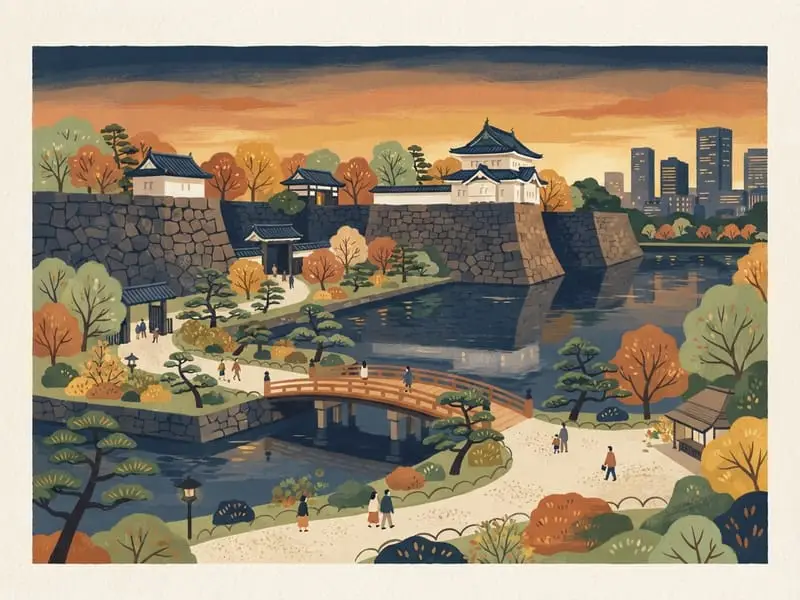
Illustration: East Gardens of the Imperial PalaceFREE

East Gardens of the Imperial Palace

Marunouchi
Always freeGood with kidsHistoryNature

The former inner grounds of Edo Castle, now a public garden behind moats and stone walls. You walk through real castle gates and can climb the base of the keep that burned down in 1657.
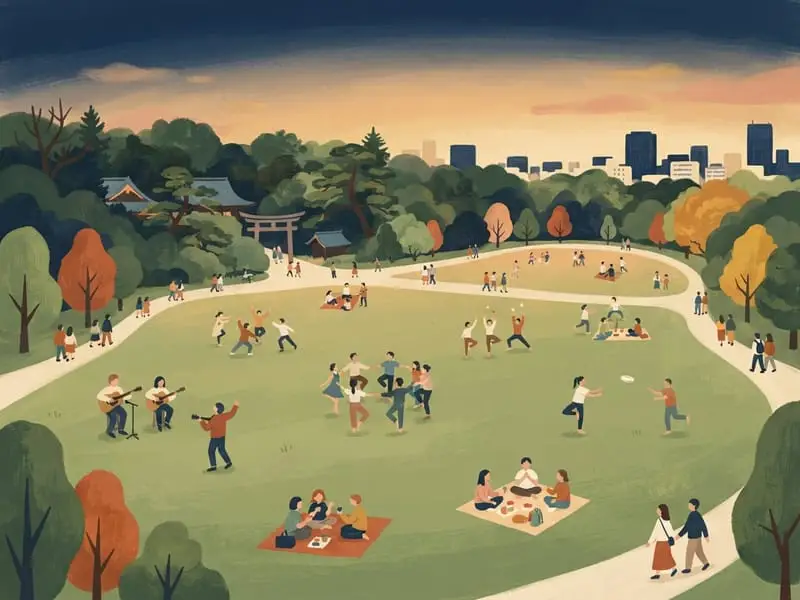
  • Climb the stone base of the lost castle keep
  • Ninomaru pond garden, with irises in June
  • Giant fitted stones at Ote-mon Gate
Free when
Always · Tue–Thu, Sat, Sun. 9:00–18:00 from 15 Apr to Aug, 9:00–17:00 in March, early April and September, 9:00–16:30 in October, 9:00–16:00 Nov–Feb. Last entry 30 min before closing. Closed Mondays and Fridays, 28 Dec–3 Jan.
Free for whom
Everyone
Reservation
Not needed. There is a bag check at the gate.
Time needed
1h30
How to get there
Otemachi Station (exit C13a) for Ote-mon Gate, 5 minutes on foot. Takebashi Station for Hirakawa-mon Gate.
Worth it? Yes.Go, but check the weekday first, because Monday and Friday closures catch a lot of people. Enter at Ote-mon and leave by Kitahanebashi-mon so you do not backtrack. The Ninomaru garden at the bottom is the prettiest corner.
Source: Imperial Household Agency · checked Oct 5, 2026Open in Maps
Illustration: Yoyogi ParkFREE

Yoyogi Park

Harajuku
Always freeGood with kidsNatureLocal lifeMusic

The big lawn next to Meiji Jingu, where Tokyo comes to practice. Dancers, drummers, dog owners and picnic groups share the grass, and most weekends there is a free food or culture festival on the event plaza across the road.
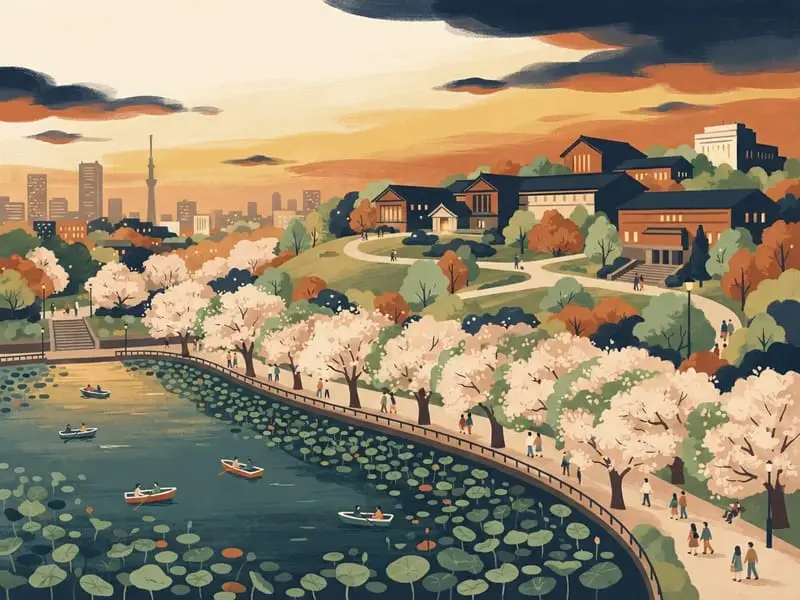
  • Rockabilly dancers by the Harajuku gate on Sunday afternoons
  • Ginkgo grove turning yellow in late November
  • Weekend festivals on the event plaza by NHK
Free when
Always · open at all hours, every day
Free for whom
Everyone
Reservation
Not needed
Time needed
1h to 2h
How to get there
JR Harajuku, 3 minutes on foot, or Chiyoda Line to Yoyogi-koen
Worth it? Yes.Sunday afternoon is the time, when the rockabilly dancers set up near the Harajuku entrance. On a weekday morning it is a pleasant park and nothing more.
Illustration: Ueno ParkFREE

Ueno Park

Ueno
Always freeGood with kidsNatureLocal lifeHistory

A hilltop park that holds most of Tokyo's big museums, a pond full of lotus and one of the city's main cherry blossom avenues. Walking it is free even though nearly every building in it charges.
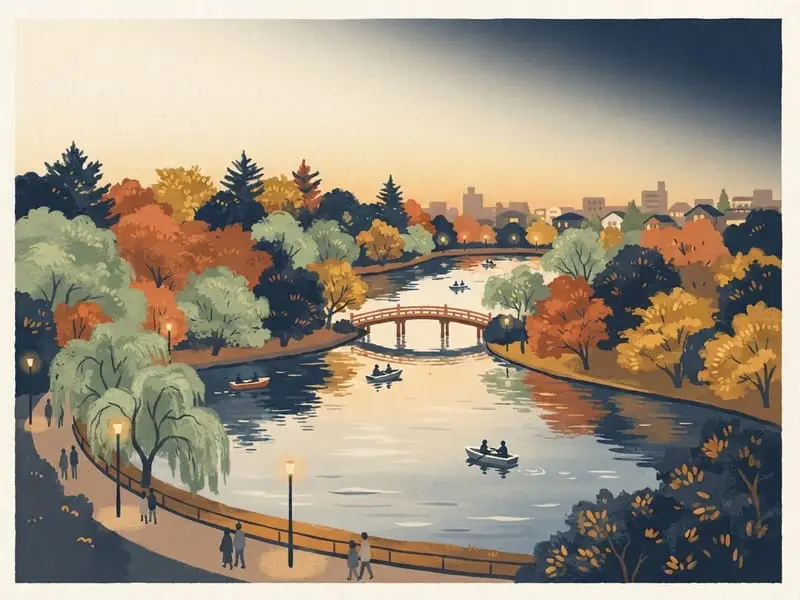
  • Lotus covering Shinobazu Pond in July and August
  • Cherry avenue from the Saigo statue to the fountain
  • Rodin's bronzes outside the Museum of Western Art
Free when
Always · open at all hours, every day
Free for whom
Everyone. The zoo and the museums are paid.
Reservation
Not needed
Time needed
1h to 1h30
How to get there
JR Ueno, Park Exit, 2 minutes on foot. Keisei Ueno is 1 minute away.
Worth it? Yes.Good as a link between other stops. Walk down to Shinobazu Pond, where the lotus leaves stand head-high in July and August. In blossom season the central avenue is shoulder to shoulder, so go before 8:00.
Illustration: Inokashira ParkFREE

Inokashira Park

Kichijoji
Always freeGood with kidsNatureLocal life

A long pond ringed by trees in Kichijoji, 15 minutes west of Shinjuku by train. Locals come for the path around the water, the buskers and craft sellers at weekends, and the red Benzaiten shrine on the west shore.
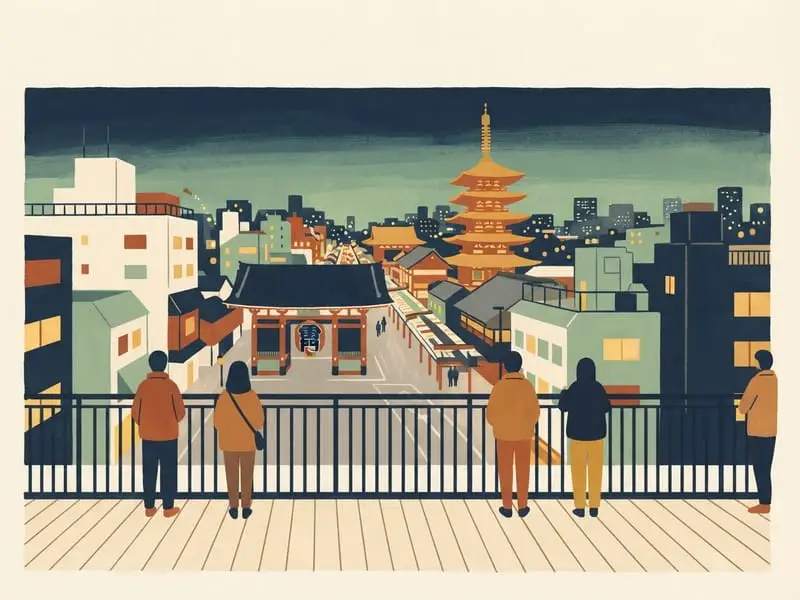
  • Cherry branches leaning over the pond in early April
  • Red Benzaiten shrine on its own little island
  • Weekend buskers and craft stalls along the path
Free when
Always · open at all hours, every day
Free for whom
Everyone. Boat rental and the small zoo are paid.
Reservation
Not needed
Time needed
1h30
How to get there
JR Chuo Line to Kichijoji, 5 minutes on foot, or Keio Inokashira Line to Inokashira-koen, 1 minute
Worth it? Yes.Worth the train ride if you have three days or more in Tokyo. Pair it with the side streets north of Kichijoji Station. During blossom season the branches hang right over the water.
Illustration: Asakusa Culture Tourist Information Center terraceFREE

Asakusa Culture Tourist Information Center terrace

Asakusa
Always freeGood with kidsViewsArchitecture

The tourist office across the street from Kaminarimon has a free open-air terrace on the 8th floor. It looks straight down Nakamise to Senso-ji and across the river to the Skytree.
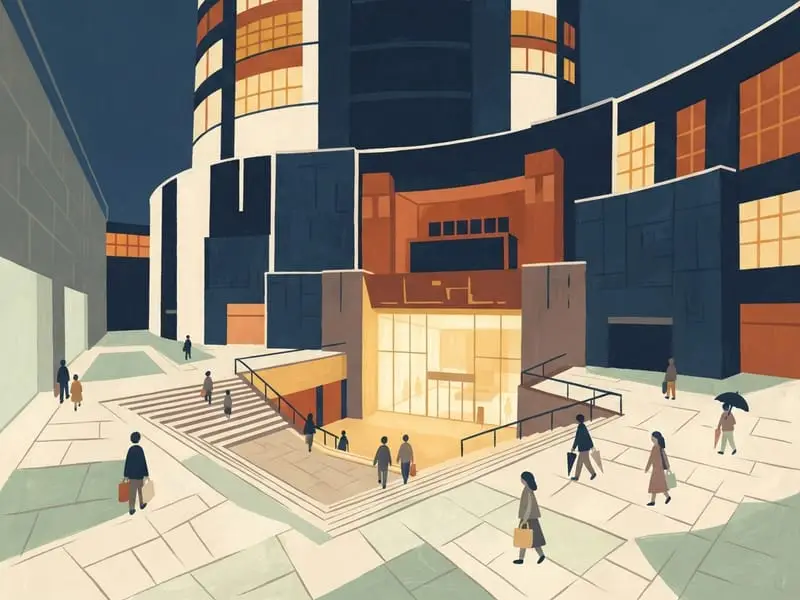
  • Straight line down Nakamise to the temple roof
  • Skytree and the golden Asahi building to the east
  • Night view after the temple lights come on
Free when
Always · every day 9:00–22:00
Free for whom
Everyone
Reservation
Not needed
Time needed
20 min
How to get there
Ginza Line to Asakusa, exit 2, 1 minute on foot. It is the stacked timber building facing Kaminarimon.
Worth it? Yes.A quick stop, and a good one. Come at dusk, when the temple lights come on and you can see how long Nakamise really is. The cafe next to the terrace is optional.
Source: Taito City · checked Oct 5, 2026Open in Maps
Illustration: Ad Museum TokyoFREE

Ad Museum Tokyo

Shiodome
Always freeIndoorArtHistoryLocal life

Japan's only advertising museum, in the basement of the Caretta Shiodome tower. It runs from Edo-period shop prints to decades of TV commercials you can watch on screens.
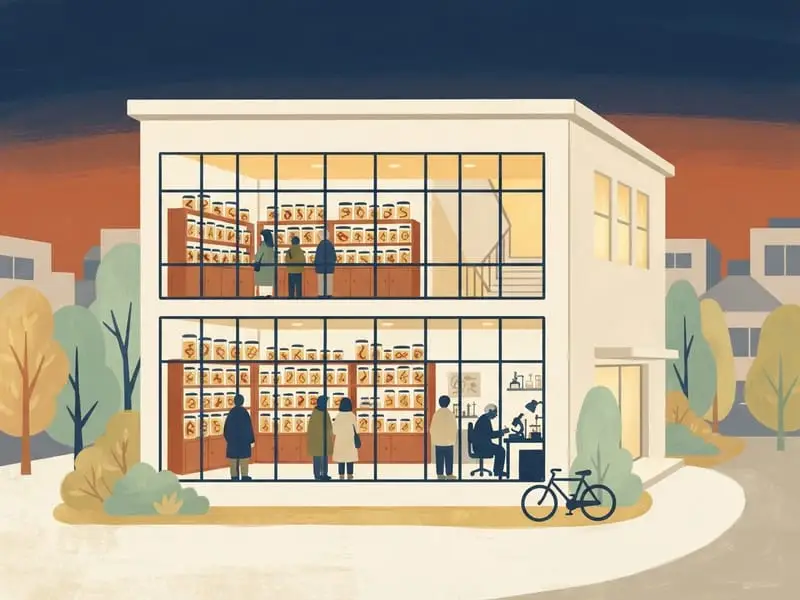
  • Edo-period woodblock flyers for kimono shops
  • Wall of postwar posters for beer and cosmetics
  • Booths playing vintage TV commercials
Free when
Always · Tue–Sat 12:00–18:00. Closed Sundays and Mondays, and it shuts now and then between shows.
Free for whom
Everyone
Reservation
Not needed
Time needed
45 min to 1h
How to get there
Toei Oedo Line or Yurikamome to Shiodome, or 5 minutes on foot from JR Shimbashi
Worth it? Yes.A good rainy afternoon stop and much better than it sounds. The old commercials need no Japanese to enjoy. Note the late start: nothing happens before noon.
Source: The Ad Museum Tokyo · checked Oct 5, 2026Open in Maps
Illustration: Meguro Parasitological MuseumFREE

Meguro Parasitological Museum

Meguro
Always freeIndoorGood with kidsLocal lifeHistory

Two floors of parasites in jars, founded by a doctor in 1953 and still a research institute. The star is an 8.8 meter tapeworm, displayed next to a ribbon of the same length that you can unroll.
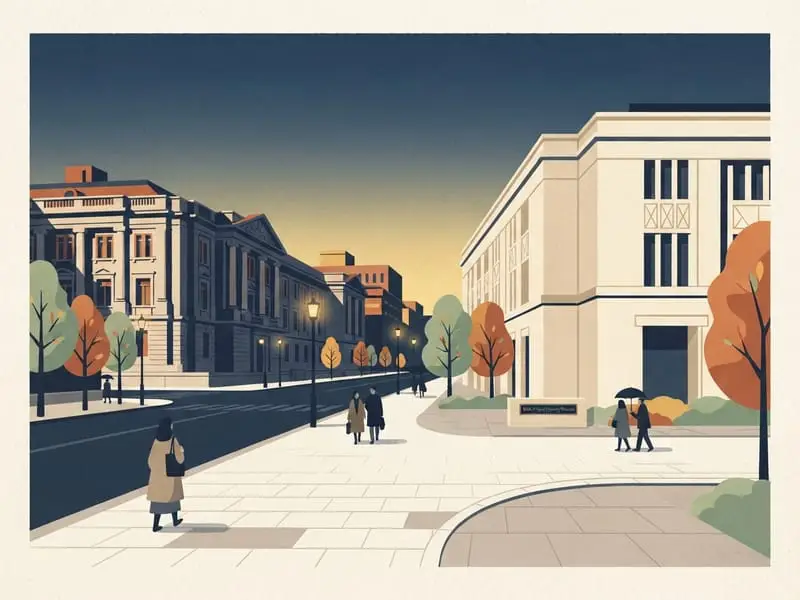
  • The 8.8 meter tapeworm on the second floor
  • Hand-drawn research notebooks of the founder
  • Parasite T-shirts in the tiny shop upstairs
Free when
Always · Wed–Sun 10:00–17:00. Closed Mondays and Tuesdays (open if a holiday, then closed the next weekday) and over New Year.
Free for whom
Everyone. Entry is free and there is a donation box.
Reservation
Not needed
Time needed
30 to 45 min
How to get there
JR Meguro, West Exit, 12 to 15 minutes on foot down Meguro-dori, or any bus from the station to Otori-jinja-mae
Worth it? Yes.Small, strange and memorable. Not for the squeamish, and oddly popular for dates. Drop a coin in the box, since donations are what keep it free.
Source: Meguro Parasitological Museum · checked Oct 5, 2026Open in Maps
Illustration: Bank of Japan Currency MuseumFREE

Bank of Japan Currency Museum

Nihonbashi
Always freeIndoorGood with kidsHistory

The central bank's own museum of money, across the street from its headquarters. It covers everything from ancient coins and Edo gold plates to today's banknote security tricks.
  • Large oval gold oban coins from the Edo period
  • Feel the weight of 100 million yen
  • Magnifiers showing the hidden details on banknotes
Free when
Always · Tue–Sun 9:30–16:30 (last entry 16:00). Closed Mondays (open when Monday is a holiday) and 29 Dec–4 Jan. In 2026 it is also closed on 20, 21 and 27–29 October.
Free for whom
Everyone
Reservation
Not needed. There is a bag check at the door.
Time needed
45 min
How to get there
Hanzomon Line to Mitsukoshimae, exit B1, 1 minute. Ginza Line exit A5, 2 minutes.
Worth it? Yes.Better than a bank museum has any right to be, and well signed in English. Try lifting the bundle that weighs the same as 100 million yen in notes. It pairs well with the East Gardens, a 15 minute walk away.
Source: Bank of Japan Currency Museum · checked Oct 5, 2026Open in Maps
Illustration: IntermediathequeFREE

Intermediatheque

Marunouchi
Always freeIndoorGood with kidsArtHistoryArchitecture

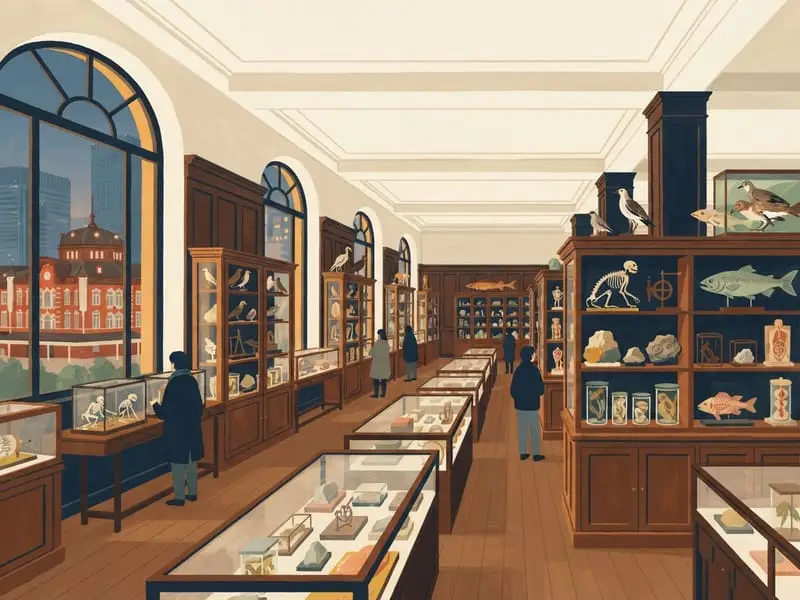
The University of Tokyo's scientific collections, laid out in old wooden cabinets inside the former Central Post Office beside Tokyo Station. Skeletons, minerals, stuffed birds and instruments, shown more like an art installation than a classroom.
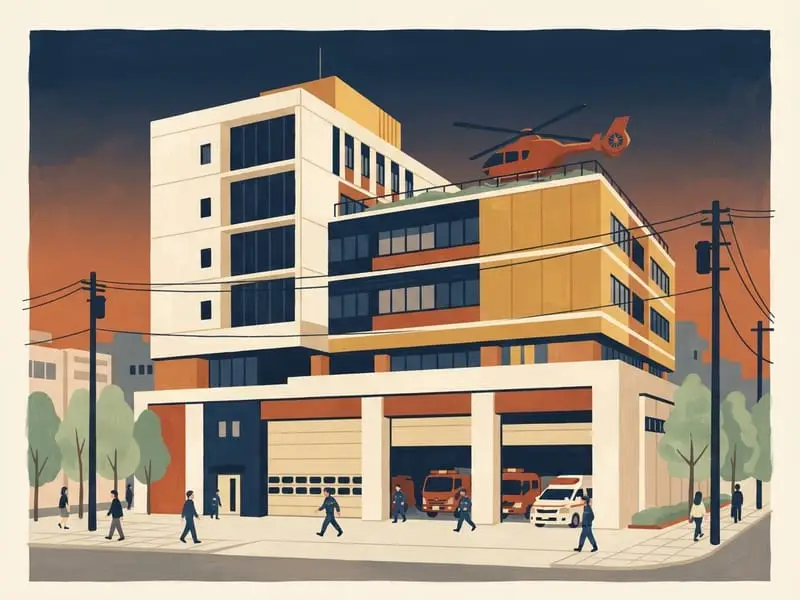
  • Whale and giraffe skeletons in the long gallery
  • Century-old wooden cabinets from university labs
  • KITTE roof garden upstairs, facing Tokyo Station
Free when
Always · Tue–Sun 11:00–18:00, until 20:00 on Fridays and Saturdays. Closed Mondays (Tuesday instead when Monday is a holiday) and at year end, with occasional extra closures.
Free for whom
Everyone
Reservation
Not needed
Time needed
45 min to 1h
How to get there
Tokyo Station, Marunouchi South Exit. It is on floors 2 and 3 of the KITTE building, entered from the 2nd floor.
Worth it? Yes.One of the best free rooms in the city, and five minutes from the Shinkansen platforms. Afterwards take the escalators to the KITTE roof garden on the 6th floor for a free look down at the red brick station.
Source: Intermediatheque, JP Tower Museum · checked Oct 5, 2026Open in Maps
Illustration: Tokyo Fire MuseumFREE

Tokyo Fire Museum

Yotsuya
Always freeIndoorGood with kidsHistoryLocal life

The Tokyo Fire Department's museum, above Yotsuya fire station. Old engines fill the basement, Edo firefighting gear is upstairs, and children can climb into a real helicopter.
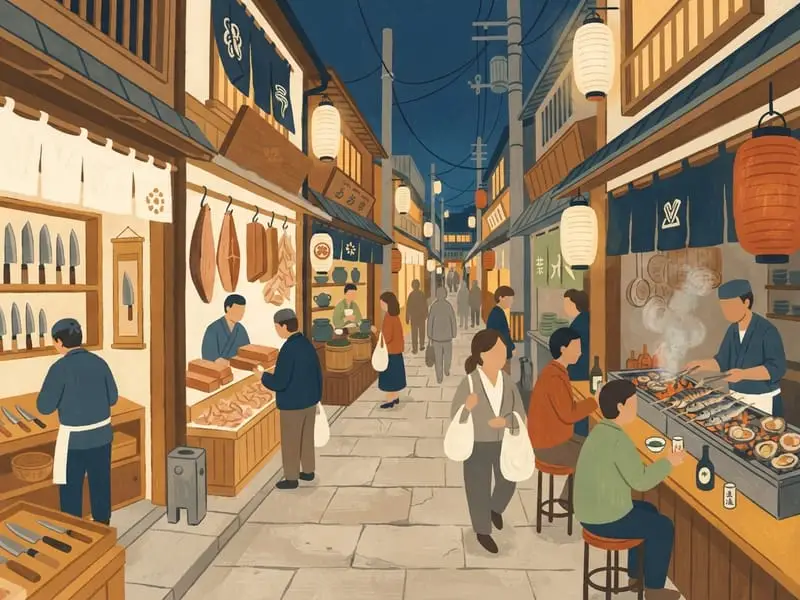
  • Vintage fire engines parked in the basement
  • Sit in the cockpit of a rescue helicopter
  • Edo-period firemen's coats and standards
Free when
Always · Tue–Sun 9:30–17:00 (last entry 16:30). Closed Mondays (open if a holiday, then closed the next weekday) and 29 Dec–3 Jan.
Free for whom
Everyone
Reservation
Not needed
Time needed
1h
How to get there
Marunouchi Line to Yotsuya-sanchome, exit 2, which opens into the building
Worth it? Yes.The best free hour in Tokyo with small children, and decent without them. English labels are thin, but fire engines explain themselves. Start in the basement.
Source: Tokyo Fire Department · checked Oct 5, 2026Open in Maps
Illustration: Tsukiji Outer MarketFREE

Tsukiji Outer Market

Tsukiji
Always freeGood with kidsFoodLocal life

The wholesale market moved out, but the grid of lanes beside it stayed: knife shops, dried bonito sellers, tea merchants and counters grilling seafood. Walking it is free and it is the best place in Tokyo to watch food being sold.
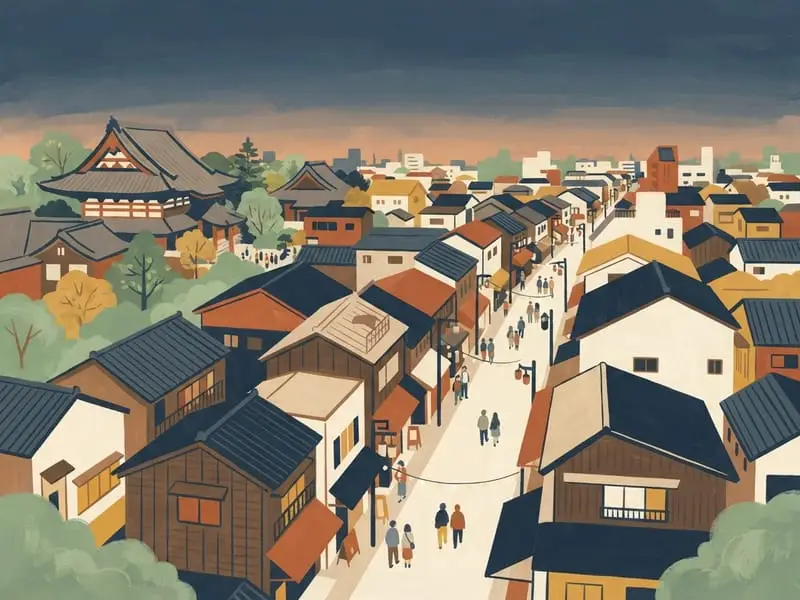
  • Shops shaving dried bonito into paper-thin flakes
  • Sweet rolled omelet cooked in square pans
  • Knife shops sharpening blades at the counter
Free when
Always · most shops trade from early morning to about 14:00. Until 9:00 professional buyers have priority; visitors are asked to come from 9:00. Many shops close on Sundays, holidays and some Wednesdays, following the wholesale market calendar.
Free for whom
Everyone
Reservation
Not needed
Time needed
1h
How to get there
Hibiya Line to Tsukiji, exit 1, or Toei Oedo Line to Tsukijishijo, exit A1
Worth it? Yes.Arrive at 9:00 sharp and leave before noon, when the lanes clog. The market's own rules matter here: eat in front of the stall where you bought, do not walk while eating, and ask before you photograph a shop.
Source: Tsukiji Outer Market official site · checked Oct 5, 2026Open in Maps
Illustration: Yanaka and Yanaka GinzaFREE

Yanaka and Yanaka Ginza

Yanaka
Always freeGood with kidsLocal lifeHistoryFood

A low-rise district of temples, wooden houses and a 170 meter shopping street that came through both the 1923 earthquake and the wartime bombing. It shows what Tokyo looked like before the towers.
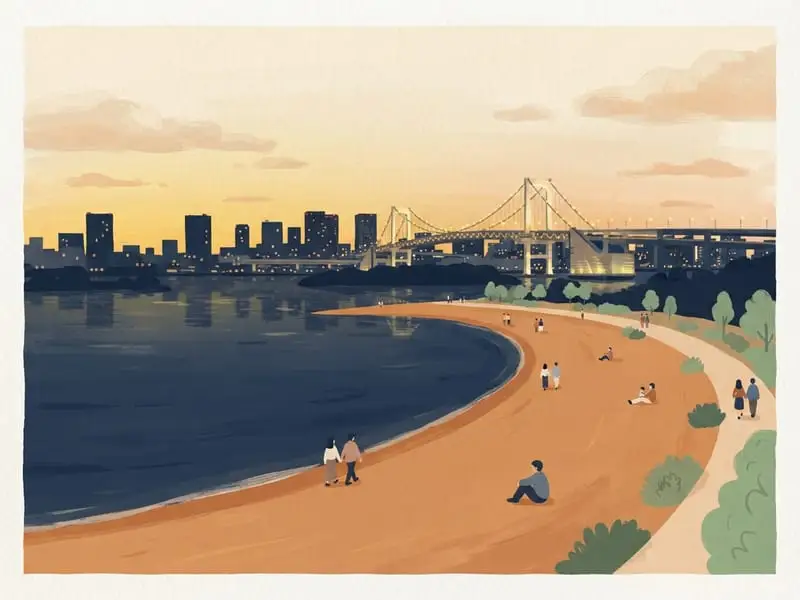
  • Sunset from the top of the Yuyake Dandan steps
  • Seven wooden cat statues hidden along Yanaka Ginza
  • Cherry-lined central avenue of Yanaka Cemetery
Free when
Always · streets open at all hours. Yanaka Ginza shops mostly open late morning to early evening, and many close one weekday.
Free for whom
Everyone
Reservation
Not needed
Time needed
1h30 to 2h
How to get there
JR Yamanote Line to Nippori, West Exit, 5 minutes on foot. Chiyoda Line to Sendagi for the other end.
Worth it? Yes.The best free walk in the city if you like ordinary streets more than sights. Start at Nippori, cross the cemetery and come down the Yuyake Dandan steps into the shopping street around 16:00, when the light turns orange.
Illustration: Odaiba Seaside ParkFREE

Odaiba Seaside Park

Odaiba
Always freeGood with kidsViewsAfter dark

A curved artificial beach on Tokyo Bay facing the Rainbow Bridge and the downtown skyline. There is a boardwalk, an observation deck and a small Statue of Liberty replica at the west end.
  • Rainbow Bridge lit up after dark
  • Statue of Liberty replica with the skyline behind
  • Daiba Park's old cannon battery at the east tip
Free when
Always · open at all hours, every day. Swimming is not allowed.
Free for whom
Everyone
Reservation
Not needed
Time needed
1h
How to get there
Yurikamome to Odaiba-kaihinkoen, 3 minutes on foot, or Rinkai Line to Tokyo Teleport
Worth it? Yes.Come for sunset and stay until the bridge lights up. By day it is a plain beach beside shopping malls. Sit on the steps at the west end, where the bridge and Tokyo Tower line up.
Illustration: Nezu ShrineFREE

Nezu Shrine

Nezu
Always freeGood with kidsHistoryArchitecture

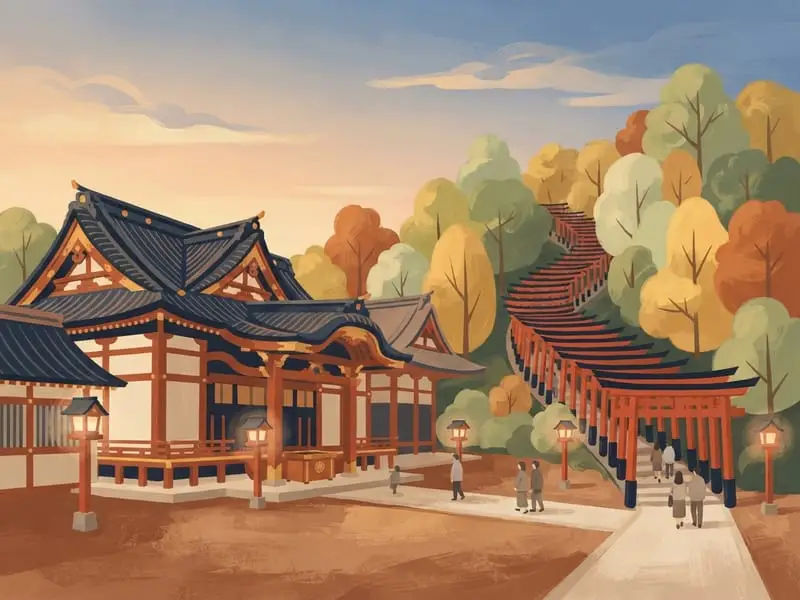
A lacquered shrine from 1706 that survived the war intact, with a tunnel of small red torii gates climbing the hillside beside it. It gives you the look of Kyoto's famous gate path without the train fare or the crowd.
  • Tunnel of red torii along the hillside
  • Viewing platform over the pond, halfway along
  • Gilded gate and main hall from 1706
Free when
Always · grounds open every day from early morning. The inner gate closes around sunset, at times that change by month. The azalea garden is a separate paid area in April.
Free for whom
Everyone
Reservation
Not needed
Time needed
30 to 45 min
How to get there
Chiyoda Line to Nezu, exit 1, or Namboku Line to Todai-mae, 5 minutes on foot from either
Worth it? Yes.A calm, handsome shrine and an easy add-on to Yanaka, ten minutes away. Walk the torii tunnel from the north end downhill for the better photo. In late April the hillside of azaleas draws big crowds.
Source: Nezu Shrine · checked Oct 5, 2026Open in Maps
Illustration: Chidorigafuchi GreenwayFREE

Chidorigafuchi Greenway

Kudanshita
Always freeGood with kidsNatureViews

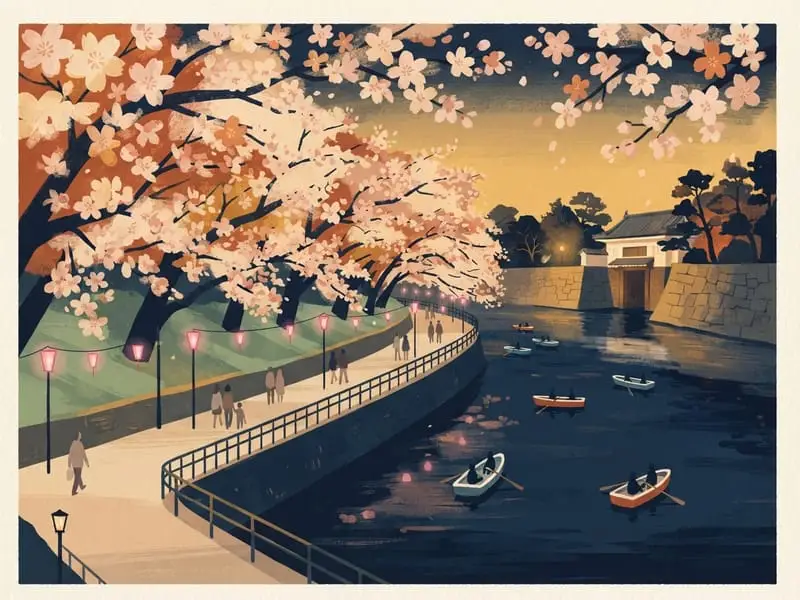
A 700 meter footpath along the north-west moat of the Imperial Palace, roofed with cherry trees. For about ten days a year it is the best blossom walk in Tokyo, and the trees are lit after dark.
  • Branches hanging down to the moat water
  • Evening illumination during peak bloom
  • Rowing boats under the blossom, seen from above
Free when
Always · open at all hours. Cherry blossom usually late March to early April, with evening illumination during that period. In 2026 the lights ran 26 March to 6 April.
Free for whom
Everyone. Rowing boats on the moat are paid.
Reservation
Not needed
Time needed
30 to 45 min
How to get there
Kudanshita Station, exit 2, 5 minutes on foot, or Hanzomon Station, exit 5, for the south end
Worth it? Yes.In blossom season, go on a weekday before 8:00 or accept a slow one-way shuffle. Picnics are banned on the path, so do not bring a mat. The rest of the year it is a quiet, shaded stretch and little more.
Source: Chiyoda City Tourism Association · checked Oct 5, 2026Open in Maps
Illustration: Gotokuji TempleFREE

Gotokuji Temple

Setagaya
Always freeGood with kidsLocal lifeHistory

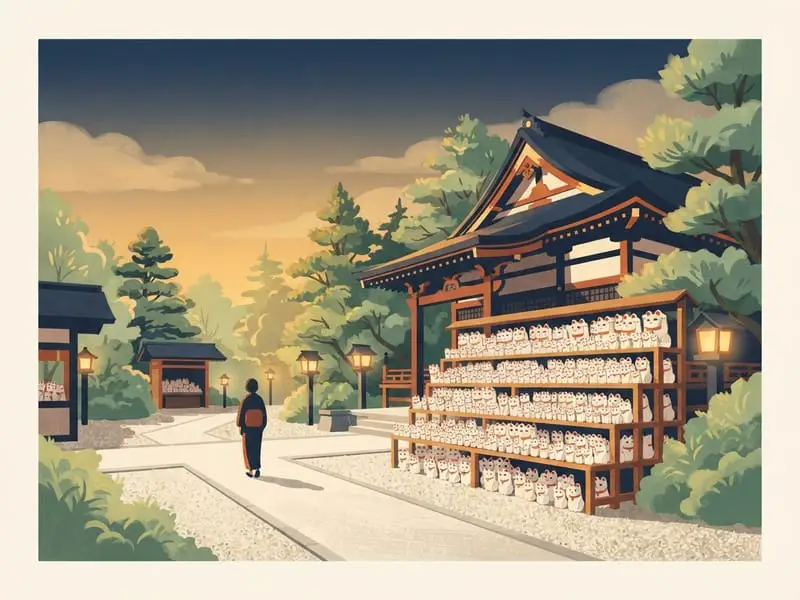
A quiet Zen temple in the western suburbs with thousands of white beckoning cat figurines crowded onto shelves beside one of its halls. Legend makes it the birthplace of the maneki-neko.
  • Shelves of white cats beside the Shofuku-den hall
  • Cat carvings on the three-story pagoda
  • Maple trees along the approach in late November
Free when
Always · every day 6:00–17:00. The temple office is open 8:00–15:00.
Free for whom
Everyone. Cat figurines to leave as offerings are sold at the office.
Reservation
Not needed
Time needed
45 min
How to get there
Tokyu Setagaya Line to Miyanosaka, 5 minutes on foot, or Odakyu Line to Gotokuji, about 12 minutes
Worth it? Yes.Worth it if you are staying on the west side or like cats. It is 20 minutes out from Shinjuku. Go before 10:00 on a weekday, because the cat corner is small and fills up fast.
Source: Gotokuji · checked Oct 5, 2026Open in Maps
Illustration: Sumo MuseumFREE

Sumo Museum

Ryogoku
Always freeIndoorHistoryLocal life

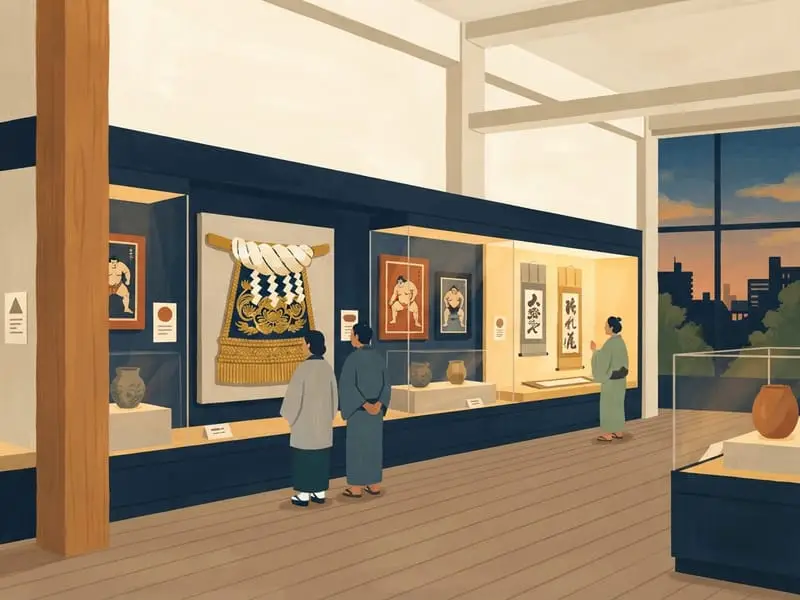
One room on the ground floor of the Kokugikan arena, run by the Japan Sumo Association. It shows ceremonial aprons, woodblock prints and ranking sheets, with the display changed three times a year.
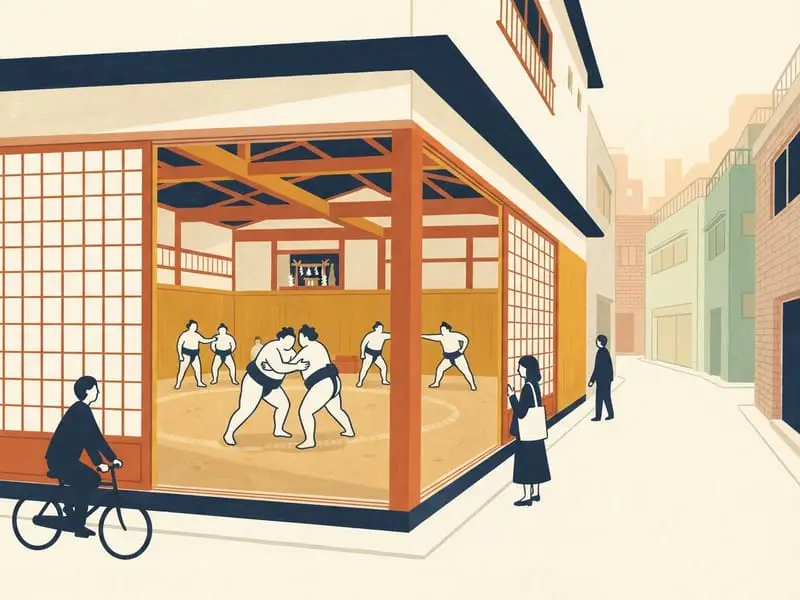
  • Embroidered ceremonial aprons worn by past champions
  • Edo-period woodblock prints of wrestlers
  • Portraits of every yokozuna along the wall
Free when
Always · Mon–Fri 10:00–16:30 (last entry 16:00). Closed weekends and national holidays, with a few exceptions, and at year end. During the Tokyo tournaments in January, May and September it opens daily 12:30–16:00 but only to people holding a tournament ticket.
Free for whom
Everyone, outside tournament days. On tournament days, ticket holders only.
Reservation
Not needed. Check the museum calendar, since it closes between exhibitions.
Time needed
20 to 30 min
How to get there
JR Sobu Line to Ryogoku, West Exit, 2 minutes on foot
Worth it? Depends.Only for people who already care about sumo. It is a single 150 square meter room, labels are mostly in Japanese, and you do not get to see the arena. Combine it with a walk around Ryogoku, where wrestlers go shopping in their robes.
Source: Nihon Sumo Kyokai · checked Oct 5, 2026Open in Maps
Illustration: Sumo morning practice at Arashio stableFREE

Sumo morning practice at Arashio stable

Nihonbashi Hamacho
Always freeLocal lifeHistory

A working sumo stable that lets anyone watch morning training for free from the street, which is rare. Most stables require a paid tour or a personal introduction.

  • Arrive by 7:30 for a spot at the front
  • Lower ranks train first, senior wrestlers later
  • Wrestlers sometimes step outside after practice
Free when
Always · practice roughly 7:30–9:00 on training days. No practice during tournaments and for about a week after, and the stable is away in Osaka, Nagoya and Fukuoka around the March, July and November tournaments. The stable posts a calendar and says the schedule is not guaranteed.
Free for whom
Everyone
Reservation
No reservation. Check the calendar on the stable's page the night before.
Time needed
30 min to 1h
How to get there
Toei Shinjuku Line to Hamacho, about 5 minutes on foot. The address is 2-47-2 Nihombashi-Hamacho.
Worth it? Depends.A real training session, with the thud of bodies a few meters away, but you stand on a residential sidewalk and look in from outside. The house rules are short: stay quiet, no flash, no eating or drinking, and keep off the neighbor's steps. If the calendar shows a rest day, do not go.
Source: Arashio-beya · checked Oct 5, 2026Open in Maps
Illustration: Toyosu Market and the tuna auctionFREE

Toyosu Market and the tuna auction

Toyosu
Always freeBooking recommendedIndoorGood with kidsFoodLocal life

The wholesale fish market that replaced Tsukiji in 2018. Visitors walk glassed-in corridors above the trading floors, and early risers can look down on the frozen tuna auction.
  • Rows of frozen tuna and buyers' hand signals
  • Life-size model of the biggest tuna ever sold here
  • Rooftop lawn with a view across the bay
Free when
Always · visitor corridors 5:00–17:00 on market days. Closed Sundays, national holidays and extra market holidays, which often fall on Wednesdays. The rooftop lawn is open 5:00–23:00, including closed days.
Free for whom
Everyone
Reservation
None for the upper corridor windows. The lower viewing deck, closer to the tuna, is by advance application and lottery on the market's website.
Time needed
1h to 1h30
How to get there
Yurikamome to Shijo-mae, linked to the buildings by covered walkways
Worth it? Depends.Go only if you will be there by about 5:45, since the auction is over within the hour and after that you are looking at an empty floor. It is clean and distant compared with the old market, so if fish at dawn does not excite you, sleep in and go to Tsukiji for breakfast. Check the market calendar before setting an alarm.
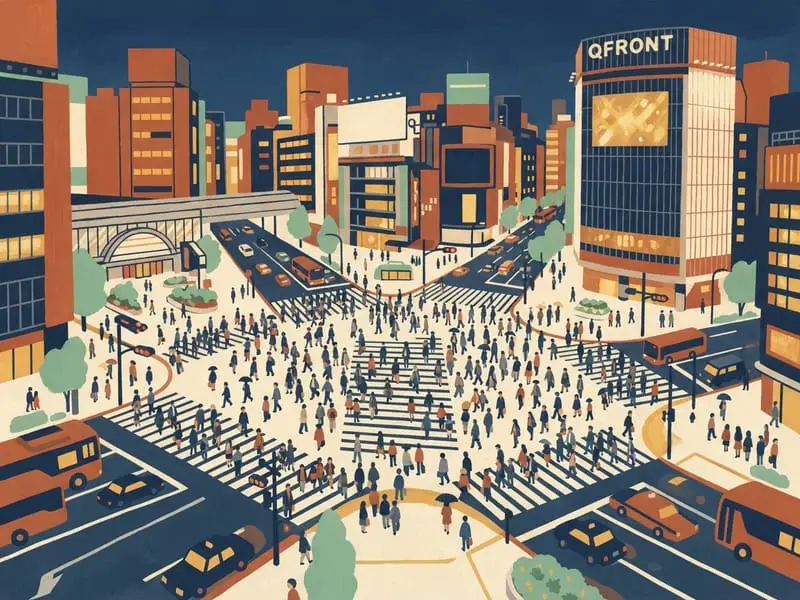
Illustration: Shibuya Scramble CrossingFREE

Shibuya Scramble Crossing

Shibuya
Always freeGood with kidsLocal lifeAfter dark

The intersection outside Shibuya Station where every light turns red at once and up to a thousand people cross in all directions. Crossing it yourself and watching it from above are both free.

  • Cross on the diagonal for the full effect
  • Station walkway windows beside the Okamoto mural
  • Hachiko statue, the standard meeting point
Free when
Always · at all hours. Busiest from 17:00 to 21:00 and on Friday and Saturday nights.
Free for whom
Everyone
Reservation
Not needed
Time needed
20 to 30 min
How to get there
JR Shibuya, Hachiko Exit. The crossing is directly outside.
Worth it? Depends.It is a pedestrian crossing, so keep expectations in line. Ten minutes is enough. For a free view from above, use the glazed walkway inside the station that leads to the Keio Inokashira Line, next to Taro Okamoto's huge mural. You do not need to pay for a rooftop to see it.

Free on certain days, or for certain people2

Mostly museums. The free window, who it applies to and the booking rule are on each card.
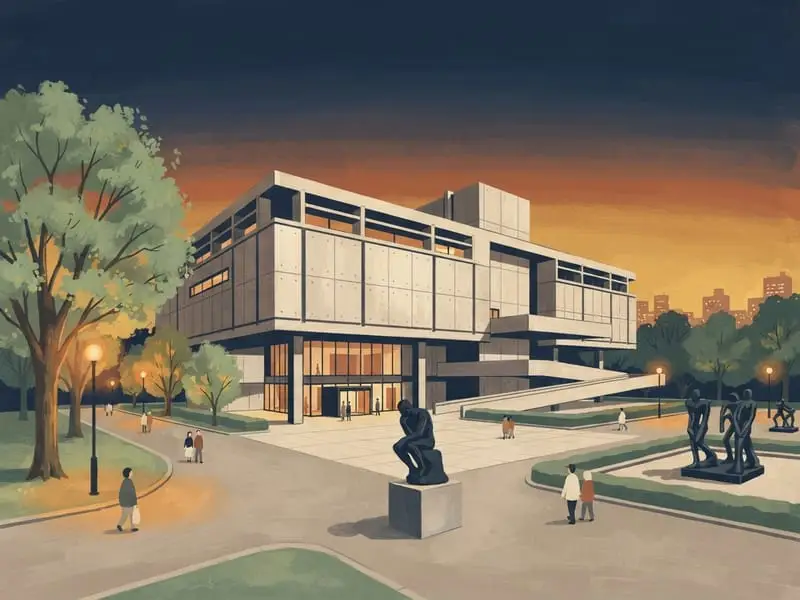
Illustration: National Museum of Western Art, second Sundays¥500FREE

National Museum of Western Art, second Sundays

Ueno
Free on certain daysIndoorGood with kidsArtArchitecture

Japan's national collection of European art, from Rodin bronzes to a room of Monets, in a building by Le Corbusier that is a UNESCO World Heritage site. The permanent collection is free one Sunday a month.
  • Monet's Water Lilies in the upstairs gallery
  • Rodin's Gates of Hell in the free forecourt
  • Le Corbusier's top-lit central hall and ramp
Free when
Free on the 2nd Sunday of every month (Kawasaki Free Sunday), plus 18 May and 3 November · 9:30–17:30, last entry 30 minutes before closing. Covers the permanent collection only.
Free for whom
Everyone on free days. On any open day: high school students and younger, under-18s, and visitors aged 65 or over, with ID.
Reservation
Not needed for the permanent collection.
Time needed
1h to 1h30
How to get there
JR Ueno, Park Exit, 1 minute on foot
Worth it? Yes.An easy win if your trip includes a second Sunday. Any other day, the Rodin sculptures in the forecourt, including The Thinker and The Gates of Hell, are outside the ticket line and free.
Source: National Museum of Western Art · checked Oct 5, 2026Open in Maps
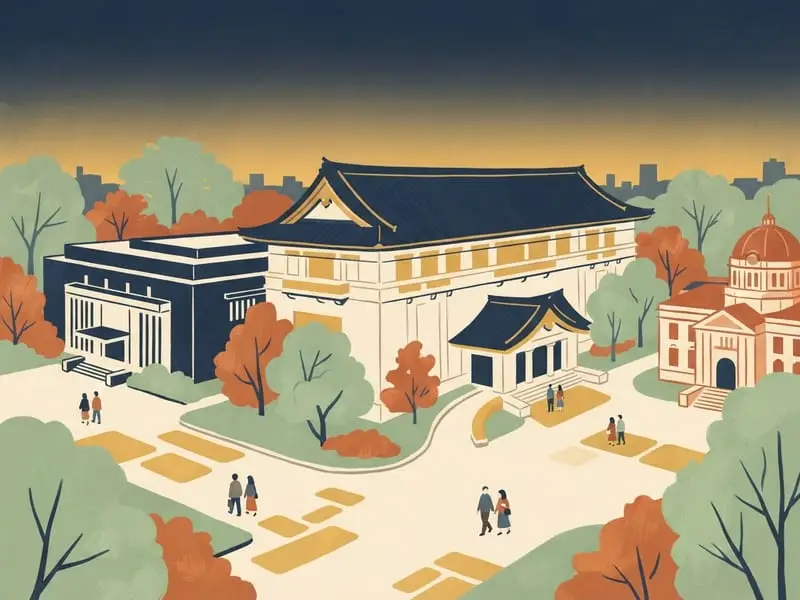
Illustration: Tokyo National Museum, under 18 and over 70¥1,000FREE

Tokyo National Museum, under 18 and over 70

Ueno
Free on certain daysIndoorGood with kidsArtHistory

The country's biggest museum, with samurai armor, swords, screens and Buddhist sculpture across several buildings. The regular galleries are free for anyone under 18 or over 70, whatever passport they hold.

  • Samurai armor and swords in the Honkan
  • Gallery of Horyuji Treasures, dim and nearly empty
  • Painted folding screens, changed every few weeks
Free when
Conditional · Tue–Sun 9:30–17:00, until 20:00 on Fridays and Saturdays. Closed Mondays. Free for everyone on a few set dates: in 2026 these were 19 May, 21 September and 3 November.
Free for whom
Under-18s and school students up to high school, and adults over 70, with proof of age. Everyone else pays except on the free dates. Special exhibitions always cost extra.
Reservation
Not needed. Show a passport at the gate for the age-based free entry.
Time needed
2h
How to get there
JR Ueno or Uguisudani, 10 minutes on foot through Ueno Park
Worth it? Yes.If you are travelling with teenagers or grandparents, this is the best value in Tokyo. For everyone else, 3 November is the date to aim for. Start in the Honkan, the main building, and do not try to see all of it.
Source: Tokyo National Museum · checked Oct 5, 2026Open in Maps

Not free, but almost4

They cost a little and give back a lot. Never mixed into the free lists.
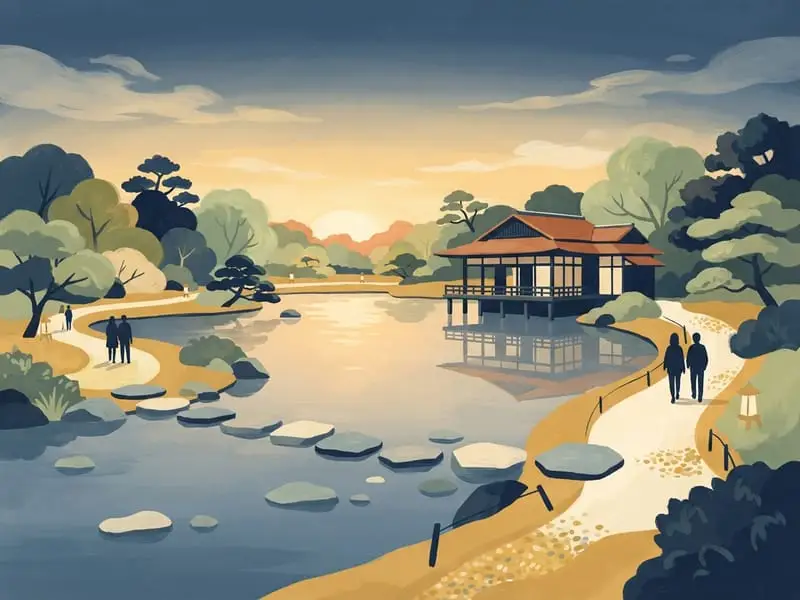
Illustration: Kiyosumi Gardens¥150

Kiyosumi Gardens

Kiyosumi-Shirakawa

A Meiji-era stroll garden built around a large pond, with stepping stones laid across the shallows and a teahouse standing over the water. Open 9:00–17:00, last entry 16:30.

The best garden per yen in Tokyo. Walk the stepping stones on the south shore, where turtles and herons sit a meter away. It is free for everyone on 4 May and 1 October.
Source: Tokyo Metropolitan Park Association

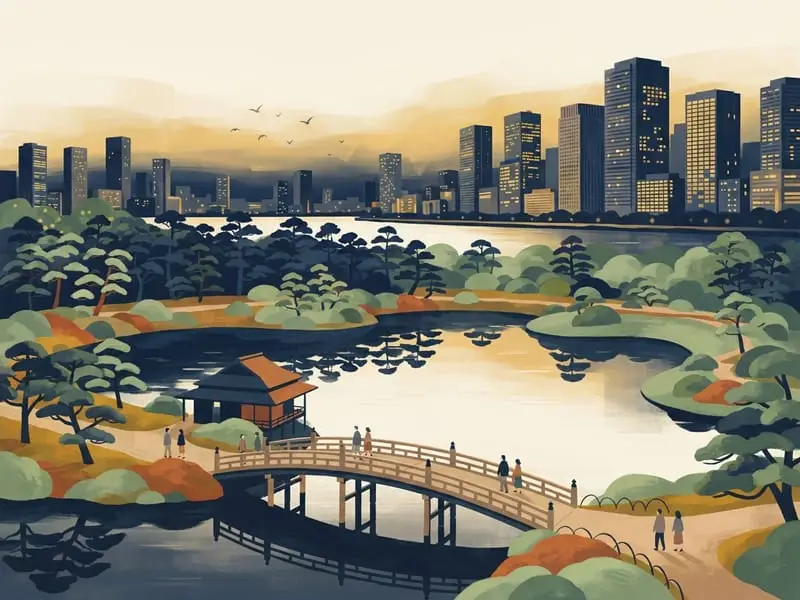
Illustration: Hamarikyu Gardens¥300

Hamarikyu Gardens

Shiodome

A former shogun's duck-hunting ground on the bay, with a tidal pond fed by seawater and a wall of Shiodome towers behind the pines. Open 9:00–17:00, last entry 16:30.

Go for the contrast of a 300-year-old pine against glass skyscrapers. Combine it with the Ad Museum, ten minutes away on foot. Free on 4 May and 1 October.
Source: Tokyo Metropolitan Park Association

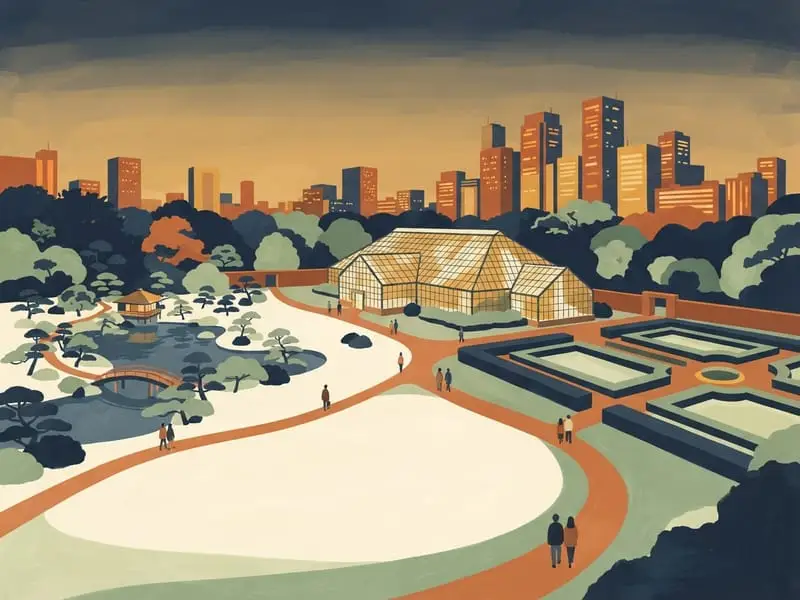
Illustration: Shinjuku Gyoen National Garden¥500

Shinjuku Gyoen National Garden

Shinjuku

A huge lawned park with Japanese, French and English sections and a big greenhouse, ten minutes from Shinjuku Station. Closed Mondays, except during the cherry season from 25 March to 24 April and from 1 to 15 November.

The one paid park worth it, mostly for late-blooming cherries in April and maples in November. Alcohol is banned, so it stays calmer than Yoyogi or Ueno at blossom time.

Source: Shinjuku Gyoen, National Gardens Association

All the almost-free picks in Tokyo

Free food and cheap bites6

What you can eat or drink for nothing, and the local classics that cost very little.
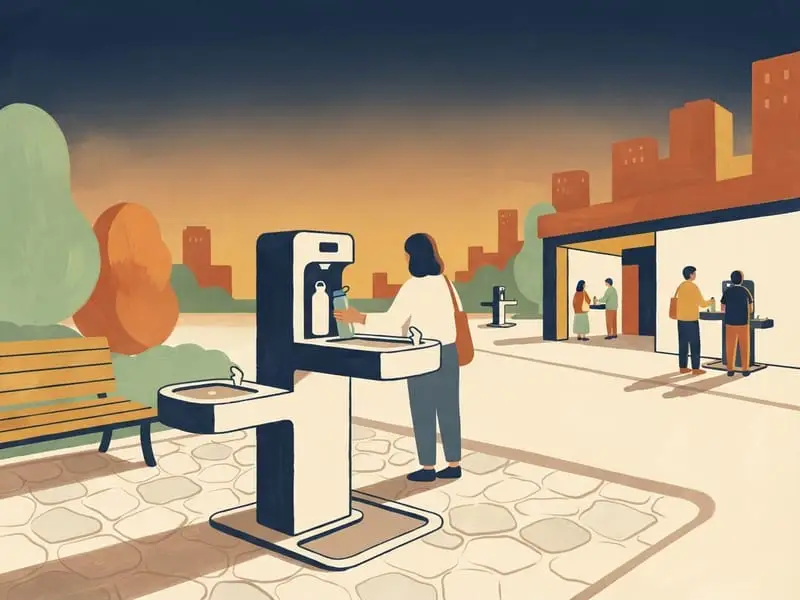
Illustration: Tokyowater Drinking StationsFree

Tokyowater Drinking Stations

Citywide

Public drinking fountains and bottle fillers run by the city waterworks, about 1,000 of them in parks, stations and public buildings. Tokyo tap water is clean and tastes fine.

Year-round. The waterworks page has a map of locations.
Source: Tokyo Metropolitan Government Bureau of Waterworks

Illustration: Tasting samples at Tsukiji Outer MarketFree

Tasting samples at Tsukiji Outer Market

Tsukiji

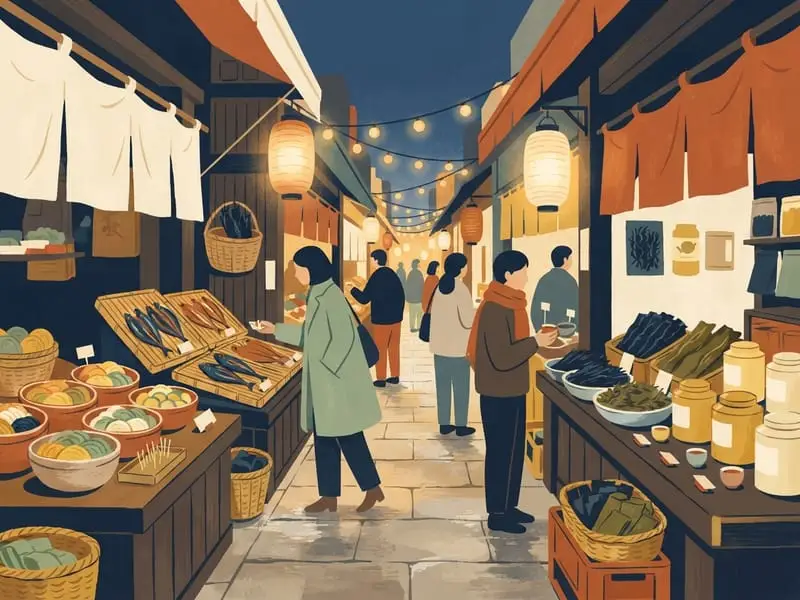
Stalls selling pickles, dried fish, seaweed and tea put out samples. The market's own rule is that they are for people who are thinking of buying, so take one, not a lunch.

Market days from 9:00 to about 14:00. Many shops close Sundays, holidays and some Wednesdays.
Source: Tsukiji Outer Market official site

Illustration: Japan Sake and Shochu Information CenterFrom ¥100 a cup

Japan Sake and Shochu Information Center

Toranomon

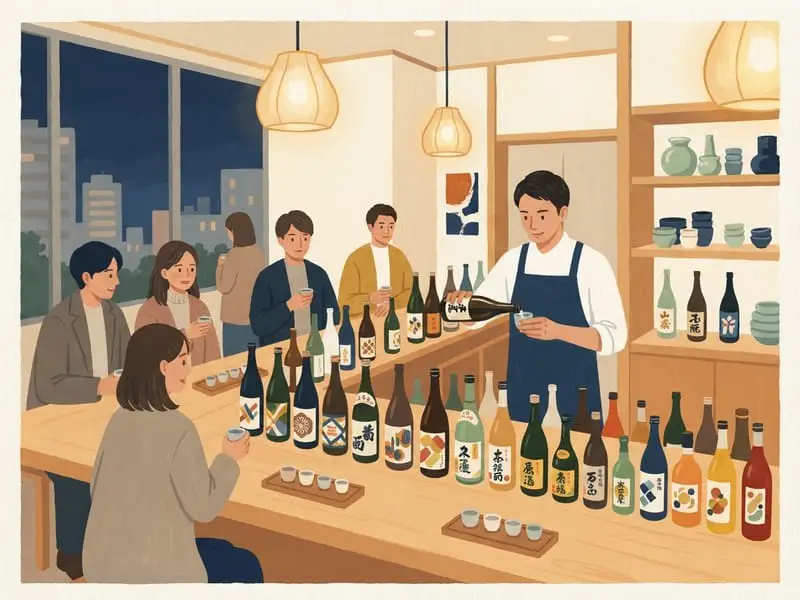
The brewers' association runs a tasting bar with around 50 sakes, shochus and fruit liqueurs from across Japan, poured by the small cup from ¥100. Three-cup sets cost a little more.

Weekdays 10:00–18:00. Closed weekends and national holidays.

Source: Japan Sake and Shochu Makers Association

All the free and cheap food in Tokyo

Free in Tokyo by season

What opens, what closes and which free events come back each year.

Before you go

  • Monday is the weak day: the East Gardens and most museums are closed, so plan shrines, parks, Yanaka and the city hall observatory instead.
  • Shrines and gardens close early in the cold months, with Meiji Jingu shutting around 16:00 in December, so put outdoor stops in the morning and observatories after dark.
  • Tap water is safe and free, and the waterworks bureau lists about 1,000 public drinking stations, so carry a bottle and skip the vending machines.

Questions people ask

Is there a free alternative to Shibuya Sky or Tokyo Skytree?

Yes. The Tokyo Metropolitan Government Building in Shinjuku has two observatories on the 45th floor, 202 meters up, free and without booking. The South room takes visitors until 21:30. It is indoors behind glass, while Shibuya Sky is an open rooftop.

Are the Imperial Palace East Gardens free, and when are they closed?

They are free and need no reservation. They are closed every Monday and Friday and from 28 December to 3 January. Closing time ranges from 16:00 in winter to 18:00 in summer.

Can I watch sumo practice for free in Tokyo?

Arashio stable in Nihonbashi Hamacho lets anyone watch morning practice from the street, free and without booking, usually from about 7:30 to 9:00. There is no practice during tournaments or when the stable is out of town, so check the calendar on its website first.

Is the Sumo Museum free during a tournament?

The museum itself is always free, but during the January, May and September tournaments at the Kokugikan you need a tournament ticket to get into the building. On ordinary weekdays anyone can walk in between 10:00 and 16:30.

Which Tokyo museums are free?

Free on every open day: the Bank of Japan Currency Museum, Intermediatheque, Ad Museum Tokyo, the Tokyo Fire Museum, the Sumo Museum and the Meguro Parasitological Museum. The National Museum of Western Art is free on the second Sunday of each month, and the Tokyo National Museum is free for under-18s and over-70s.

Free things in other cities